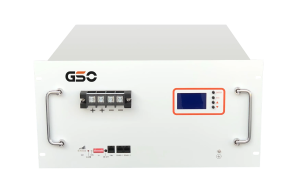

Commercial battery storage has to solve a different problem from simply storing surplus electricity. A business may need energy for scheduled load shifting, power during an interruption, or a modular system that can grow with the facility. That makes the specification sheet more important than a headline capacity figure.
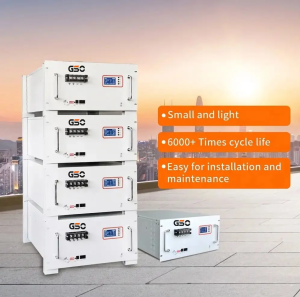
We look at commercial storage by asking what the facility needs to deliver, how the battery will be integrated, and whether its operating characteristics justify the investment.
What a Commercial Battery Has to Deliver
Sizing starts with the load that the battery is expected to serve. A facility using storage for backup needs enough energy for the critical loads and the required duration. A facility pursuing peak shaving has a different objective: the battery must discharge enough power during high-demand periods to affect the facility’s load profile.
Energy and power should therefore be calculated separately. Battery capacity, measured in kWh, determines how much energy is available. Charge and discharge capability determines how quickly that energy can move.
The GBP-R rack series illustrates this modular approach. Its listed configurations range from 2.56 kWh to 16.1 kWh per module, with nominal voltages of 25.6 V, 48 V, and 51.2 V depending on the model. Maximum continuous charge and discharge current is specified as 1C for applicable configurations, with customization available.
Reading the Numbers That Define a Rack Battery
Commercial buyers should look beyond nominal capacity. Operating voltage, charge and discharge current, temperature range, protection level, physical dimensions, weight, and communication interfaces all influence whether a battery can work within a particular system.
The GBP-R series uses LiFePO4 cells and specifies more than 5,000 cycles at 80% depth of discharge. A 10-year life rating is also available, with CE, MSDS, and UN38.3 documentation provided for the series.
Environmental specifications can be equally important. The listed operating temperature range is -30°C to 60°C, with 10°C to 35°C recommended; charging is specified from 0°C to 55°C and discharging from -10°C to 55°C. The standard protection level is IP20, so the installation environment must be considered when designing the enclosure and equipment room.
Why Modular Capacity Changes the Project Design
A commercial system rarely has a permanently fixed energy requirement. Production may expand, backup expectations may change, or the facility may add new loads. A modular rack architecture can address that uncertainty more easily than a single large battery block.
The GBP-R series supports parallel connection of up to 16 units, with automatic addressing. We offer a scalable range from 2.56 kWh to more than 256 kWh through additional modules.
That capability changes how we approach initial sizing. A business does not necessarily have to install its ultimate storage capacity on day one, provided the complete system architecture supports later expansion. The initial configuration still needs to be designed correctly for voltage, communications, protection, and available rack space.
Where the Rack Format Creates an Operational Advantage
Physical design becomes important once storage moves into a commercial facility. Rack batteries are intended to use vertical equipment space rather than consuming large areas of floor space with separate battery blocks.
The GBP-R is designed for rack mounting, with front-access wiring and an LCD interface. We enable installers to select the inverter communication protocol from the screen and view battery status and fault information without removing the unit from the rack.
Maintenance access can influence operating costs and downtime. Front-access servicing and displayed fault codes can make diagnosis more straightforward, while automatic addressing reduces manual configuration when additional units are connected.
How Stored Energy Becomes a Commercial Tool
The value of commercial battery energy storage systems depends heavily on how the facility operates them. Peak shaving is one example: energy can be stored during lower-demand periods and discharged when facility demand rises. Rack batteries are specifically suitable for peak shaving and load leveling.
Backup is another use. Critical equipment can be supported by stored energy during an interruption, with the required battery capacity determined by the load and desired runtime.
Integration also matters. The GBP-R supports CAN/RS485 communication and is described as compatible with major hybrid inverter systems. Its built-in protocol selector is intended to simplify communication configuration during installation.
Which Facilities Can Make Practical Use of It
Rack-mounted storage is particularly relevant where equipment density, scalability, and continuity matter. We identify telecom base stations, data centers, commercial solar-plus-storage projects, industrial backup systems, and residential rack installations among the intended scenarios.
Data centers and communication facilities can place greater emphasis on compact installation, monitoring, protection, and dependable backup. Commercial solar projects may focus more heavily on shifting PV energy and managing facility demand.
Industrial sites can have another priority: maintaining selected equipment when grid power is unavailable. In each case, the same battery specification can produce a different value depending on the operating objective.
A Specification Is Useful Only When It Fits the Load
Commercial battery energy storage systems should ultimately be evaluated against the facility rather than against an isolated product table. We would first establish the required energy and discharge power, then check voltage, operating conditions, communications, physical installation, and expansion requirements.
At GSOpower, we offer the GBP-R series—rack-mounted LiFePO4 modules available from 2.56 kWh to 16.1 kWh per unit, with parallel expansion, automatic addressing, and front-access maintenance. We designed these features specifically for projects where modularity and rack-based installation are key priorities.
The practical benefit is not simply having a large battery. A correctly configured system can turn stored energy into a controllable resource for peak periods, backup requirements, or solar-energy shifting.
For buyers comparing commercial battery storage, the strongest choice is therefore the configuration that matches the facility’s load profile, operating strategy, physical environment, and future expansion plan. A technically impressive battery that does not fit those requirements is still the wrong battery.
Conversely, a modular system with the right energy, power, communication, and installation characteristics can provide a much clearer path from storage capacity to measurable operational value.