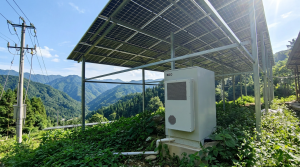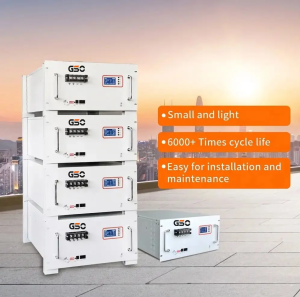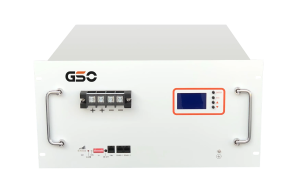

Solar batteries can look similar from the outside, yet the chemistry inside them determines much of how they behave during repeated charging and discharging. If you are comparing storage technologies for a home, commercial site, or off-grid installation, understanding lithium iron phosphate is more useful than simply comparing battery capacity.
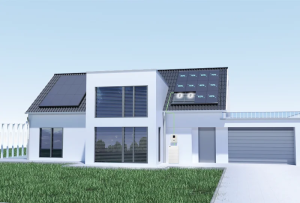
We see a LiFePO4 solar battery as a complete storage component built around lithium iron phosphate cells, a battery management system, protection functions, and communication interfaces. The chemistry provides the electrochemical foundation, while the surrounding electronics turn individual cells into a controllable energy-storage unit.
What Exactly Is a LiFePO4 Solar Battery?
LiFePO4 stands for lithium iron phosphate, referring to the cathode chemistry used in the battery. A typical cell has a nominal voltage around 3.2V, and multiple cells can be connected in series and parallel to create a higher-voltage battery pack with the required capacity.
That distinction matters because a battery pack is not simply a collection of cells. In our systems, the cells work together with a BMS that monitors operating conditions and provides functions such as over-charge, over-discharge, short-circuit, and temperature protection.
The result is a rechargeable storage unit designed to capture electricity and make it available later. In a solar installation, this stored energy can be used when PV generation is insufficient, including evening periods or other times when the system needs additional power.
How the Battery Stores and Delivers Solar Energy
Imagine a solar installation producing more electricity than the connected loads currently consume. Instead of allowing that surplus generation to go unused, the system can direct it toward the battery.
The hybrid inverter manages the electrical conversion and charging process. Solar panels produce DC electricity, while the inverter coordinates PV input, battery charging, household or facility loads, and grid interaction according to the system configuration.
Later, the stored energy can flow back through the inverter to supply AC loads. This creates a practical energy path: solar generation during available sunlight, battery charging when surplus energy exists, and discharge when stored electricity has greater value or is needed for backup.
A complete solar battery storage setup therefore involves more than choosing a battery with a particular kWh rating. Battery voltage, inverter compatibility, charge and discharge limits, communications, and system controls all influence how effectively the stored energy can be used.
What Makes the Battery More Than Just a Cell?
A major part of a modern battery pack is the Battery Management System. The BMS monitors battery conditions and helps keep the cells within appropriate operating limits. It can also communicate information such as battery status to connected equipment.
We design battery systems with communication interfaces such as CAN and RS485, allowing the battery to exchange information with compatible equipment and support monitoring or control functions.
Protection is equally important. Battery documentation from our product range describes multi-level protection strategies, including temperature alarms, over-charge and over-discharge protection, short-circuit protection, and fault isolation.
Physical architecture also changes how a storage system is deployed. Depending on the project, LiFePO4 batteries can be configured in wall-mounted, stacked, wheeled, or rack-mounted formats. Modular construction can also allow additional battery units to be connected as energy requirements increase.
Where LiFePO4 Fits in a Complete Solar System
A residential installation may combine LiFePO4 battery modules with a hybrid inverter in a compact system. Larger projects can use rack-mounted battery clusters with power conversion equipment, while commercial and industrial installations can employ larger integrated storage architectures.
Our product portfolio covers residential storage as well as commercial and industrial configurations, including rack-mounted battery systems and larger BESS equipment. The appropriate architecture depends on the site’s load profile, available installation space, required power, desired energy capacity, and control strategy.
For an off-grid project, the battery becomes particularly important because stored energy may need to bridge periods without sufficient solar production. In a grid-connected system, the same storage capacity can instead be coordinated with solar generation, backup requirements, or energy-management objectives.
What Should You Check Before Choosing One?
Start with the actual electrical requirement rather than the battery label. Determine how much energy the site needs and, separately, how much power must be delivered at any moment. Capacity and power answer different questions.
Next, check whether the battery and inverter can communicate correctly. A battery may have suitable voltage and capacity yet still require compatible communication protocols and control settings for reliable system operation.
Operating conditions deserve attention too. Temperature, installation environment, charging limits, discharge limits, and expected cycling patterns can influence long-term operation. We recommend evaluating the complete operating envelope instead of judging a battery from cycle-life claims alone.
Expansion is another practical question. Some modular systems support parallel connection, allowing storage capacity to grow as requirements change. The exact expansion limit should always come from the manufacturer’s documentation rather than being assumed across different models.
Why the Battery Chemistry Matters to the Whole System
The value of lithium iron phosphate is not isolated inside the battery cell. Chemistry, BMS design, thermal conditions, inverter coordination, installation, and operating strategy work together to determine how a storage system performs over time.
At GSOpower, our published battery information describes LiFePO4 systems with designed service lives exceeding 10 years for specified products, while individual product specifications vary by model and operating conditions.
For that reason, choosing a LiFePO4 solar battery should begin with the complete energy-storage application rather than a single headline specification. When the battery chemistry, electronics, inverter, protection strategy, and site requirements are matched correctly, the result is a coherent storage system rather than simply a larger battery.
That is the key point behind modern solar energy storage: the chemistry provides the foundation, but the complete system determines how useful that stored energy becomes.