
Purchasing renewable backup hardware often triggers immediate sticker shock for facility managers and homeowners alike. Initial invoices bundle high-density LiFePO4 cells, hybrid power conversion systems, wiring, permits, and professional installation labor. Buyers naturally question whether paying thousands of dollars upfront makes financial sense compared to remaining fully reliant on traditional utility grids.

Unpacking this economic puzzle demands looking past checkout receipts to evaluate how operational savings accumulate over decades. Long-term profitability depends heavily on hardware durability, daily cycling efficiency, and unpredictable utility tariff hikes. Modern energy users seek absolute clarity on whether initial investments pay dividends over time.
Analyzing Initial Capital Outlays and Hardware Realities
Capital expenditure forms the most visible hurdle in any renewable energy transition project. Hardware bills encompass advanced lithium modules, intelligent battery management systems, and robust enclosures designed to withstand harsh outdoor environments. We at GSOpower recognizes that buyers scrutinize every dollar spent on initial equipment procurement.
Avoiding cheap low-grade components ensures safety, yet premium Grade A cells command higher initial prices. Evaluating baseline solar battery storage cost requires looking beyond hardware tags to include engineering, logistics, and grid interconnection compliance. Upfront invoices reflect complex power electronics designed to manage stable on-grid and off-grid transitions without damaging sensitive loads. Buyers must factor in mounting hardware, protective switchgear, and inverter compatibility before signing procurement contracts.
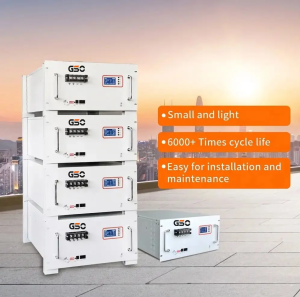
Initial expenses also vary depending on whether a deployment targets a single-family home or a massive industrial microgrid. Residential systems typically range from compact wall-mounted units to modular configurations, whereas commercial projects demand containerized liquid-cooled cabinets. Manufacturing scale and automated production techniques help direct suppliers minimize production waste and pass savings directly to project developers.
Transparent pricing structures allow procurement teams to separate hardware expenses from soft costs like local permitting and inspection fees. Careful budgeting at this initial stage prevents unexpected budget overruns during physical installation and site commissioning. Industry participants recognize that upfront clarity prevents long-term friction.
Calculating Multi-Year Operational Savings and Tariff Volatility
Financial returns materialize gradually as systems execute daily charge and discharge cycles. Utility companies increasingly implement aggressive time-of-use pricing models that penalize heavy consumption during evening peak hours. Storing cheap solar generation during midday sunlight hours enables facilities to avoid expensive grid electricity when rates spike.
Operating solar battery storage installations strategically transforms intermittent photovoltaic generation into a predictable, dispatchable power asset. Commercial operators utilize automated peak shaving algorithms to suppress demand charges that often constitute the largest portion of industrial utility bills. System owners leverage intelligent software to automate energy flows effortlessly.
Grid electricity tariffs rarely remain static over a fifteen-year operational horizon. Historical inflation data shows utility rates climbing steadily across most major global markets year after year. Every kilowatt-hour discharged from a local battery represents expensive utility power permanently displaced from monthly operating expenses.
Accumulated savings compound over time, slowly erasing the memory of the original capital investment. Smart energy management systems continuously optimize charging schedules based on real-time weather forecasts and historical consumption patterns. This algorithmic intelligence optimizes daily financial yields with minimal need for manual intervention from facility staff. Continuous optimization secures steady fiscal advantages year after year.
Evaluating Maintenance Profiles and Equipment Lifespan Returns
Hardware longevity dictates the true denominator in any long-term return-on-investment calculation. Cheap batteries degrade rapidly, losing usable capacity within a few short years and requiring premature replacement. Selecting robust storage solutions featuring extended cycle lifespans helps ensure reliable performance across years of operation.
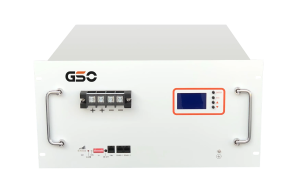
Our design approach at GSOpowerprioritizes thermal management and advanced cell balancing across manufacturing facilities to protect underlying asset value.Liquid-cooled and high-density rack-mounted architectures prevent localized hotspots that accelerate chemical degradation inside lithium iron phosphate modules. Rigorous thermal engineering safeguards long-term performance metrics reliably.
Maintenance expenses for quality systems remain remarkably low due to solid-state electronics and automated remote diagnostic platforms. Modern cloud communication tools alert technicians to minor anomalies before minor issues escalate into costly component failures.
Avoiding unexpected downtime protects commercial productivity and reduces recurring repair bills that plague inferior energy setups. Total cost of ownership calculations must factor in warranty terms, expected capacity retention rates, and replacement labor projections. Quality hardware maintains greater than eighty percent original capacity even after ten years of rigorous daily cycling. Reliable operation minimizes unforeseen financial surprises.
Reconciling Upfront Budgets with Long-Term Financial Value
Balancing initial expenditure against multi-year fiscal performance requires a disciplined accounting perspective. Upfront price tags tell only half the story, ignoring the powerful financial shield that energy storage provides against future grid instability.
Calculating total solar battery storage cost demands factoring in degradation, efficiency losses, and anticipated utility rate inflation over the entire asset lifecycle. Savvy investors evaluate payback periods by dividing net capital outlays by annual electricity bill savings and demand charge reductions. Comprehensive financial modeling reveals true profitability horizons accurately.
Operational resilience and long-term savings depend directly on choosing robust equipment configurations. Deploying advanced solar battery storage units changes the fundamental cash flow dynamics of modern buildings. We remain committed to bridging the gap between premium engineering and accessible project economics for global partners.
Choosing resilient, high-efficiency storage infrastructure transforms a burdensome capital expense into a reliable profit-generating engine. Strategic energy independence protects businesses and homeowners from external market shocks while building a sustainable financial foundation. Prudent financial planning proves that spending more on quality hardware upfront delivers superior long-term value.