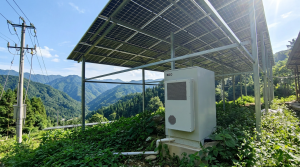

A battery quotation can look surprisingly different from one supplier to another, even when both systems appear to have similar capacity. The reason is simple: buyers are rarely comparing the same complete system. A battery module may be quoted alone, while another offer includes an inverter, controls, installation, protection equipment, commissioning, and other project requirements.
We approach budgeting differently. Rather than treating one market average as a universal answer, we start with the job the battery must perform. That makes the budget more useful for homeowners, installers, and commercial buyers evaluating a project.
Why One Battery Price Is Rarely Reliable
A useful budget begins with capacity, but capacity is only the first variable. A 10 kWh residential system and a commercial system with a much larger energy capacity can have completely different architectures, power requirements, controls, and installation conditions.
Current market references illustrate the spread. In the U.S., EnergySage reported an average installed residential battery price of about $15,647 for a 13.5 kWh system in July 2026, while Solar.com reported a broader installed range of $6,000–$18,000. These figures are useful benchmarks, but they should not be treated as universal quotations because local labor, equipment configuration, incentives, and site conditions differ.
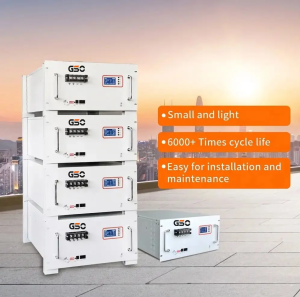
Our own product portfolio also shows why scale matters. We provide residential storage from 5 kWh to 30 kWh, while our commercial and industrial solutions use rack-mounted battery clusters and PCS equipment for scalable systems. A project therefore needs to be priced according to its architecture rather than its battery capacity alone.
Budget Ranges by System Scale
For a residential buyer, a practical starting point is to think in capacity bands rather than one fixed number. Recent 2026 market references place many installed home systems in the several-thousand-to-tens-of-thousands-of-dollars range, depending heavily on capacity and configuration.
A small system may suit essential-load backup or modest solar self-consumption. Moving toward 10–15 kWh generally creates a larger equipment and installation commitment, while systems above 20 kWh can require additional consideration of inverter power, available space, electrical integration, and load requirements.
Commercial projects need a different budgeting method. Instead of asking only “How many kWh?”, we examine both energy capacity and discharge power. A factory seeking peak shaving, for example, may need substantial PCS capacity even if its required stored energy is relatively modest.
We also avoid assuming that a larger battery automatically provides better economics. If the system cannot regularly use the stored energy, additional capacity may increase upfront spending without producing proportional value.
What Actually Moves the Project Price
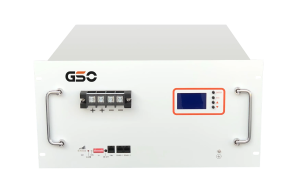
Battery chemistry and module configuration are obvious cost factors, but they are not the whole equation. LiFePO4-based systems, for example, can be configured in different voltage classes, enclosure formats, and levels of monitoring and protection.
The inverter architecture can materially change the quotation too. A residential project may use a hybrid inverter, while a larger C&I installation can require PCS equipment, communication systems, and coordinated energy management. Our C&I portfolio combines rack-mounted battery clusters with PCS converters and scalable system configurations.
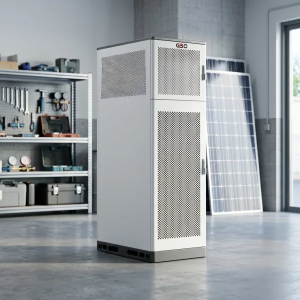
Installation conditions create another layer of variation. Indoor and outdoor installations can require different enclosure protection, wiring arrangements, mounting methods, and site preparation. Customized communication, higher discharge rates, and other specifications can also change the final quotation.
For buyers comparing a solar battery storage cost, this means the cheapest line-item battery is not necessarily the cheapest complete project. A lower equipment price can be offset by additional inverter work, installation complexity, or missing system components.
How We Turn a Budget Into a Real Quote
We begin with the load profile and the purpose of storage. Backup power, solar self-consumption, peak shaving, and off-grid operation can lead to very different configurations even at similar capacities.
Next, we examine location, operating environment, required power, desired energy capacity, inverter compatibility, and expansion plans. Our residential systems include wall-mounted and stacked LiFePO4 options, while larger projects can use modular C&I configurations.
Only after those points are clear do we move toward equipment selection and pricing. This workflow prevents buyers from comparing a battery-only price with a complete turnkey system.
As an added service, we can calculate for business clients whether it’s more cost-effective to buy the maximum capacity up front or to expand using modular components. The scalability of our systems’ configurations allows us to better match upfront costs with ongoing project needs.
Choose the Budget Around the Energy Job
A sensible solar battery storage cost estimate should answer three questions: how much energy must be stored, how much power must be delivered, and what equipment is required to make the system operate safely and reliably.
We recommend treating published prices as starting points rather than promises. A residential buyer can use current market ranges to establish an initial budget, while a C&I buyer should request a project-specific quotation based on load data and operating objectives.
At GSOpower, we therefore build the quotation around the application rather than forcing every project into a standard package. The result is a more meaningful comparison between suppliers because the buyer can see what equipment and services are actually included.
Ultimately, the right budget is not the lowest number on a product page. It is the investment required to deliver the required energy, power, control, and installation scope without paying for capacity the project cannot effectively use.