- +(86) 514-87520588
- norah@gsopower.com
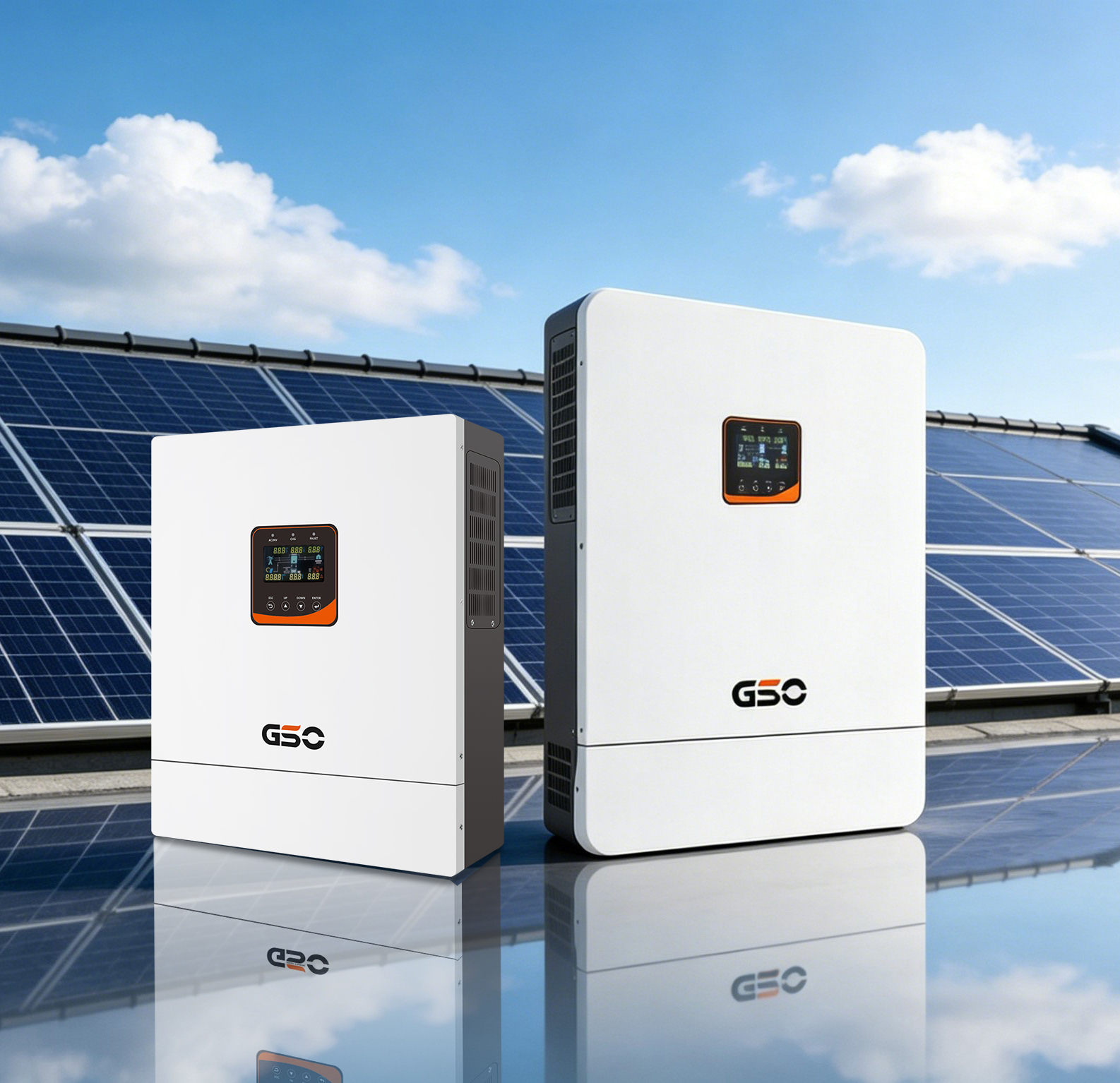
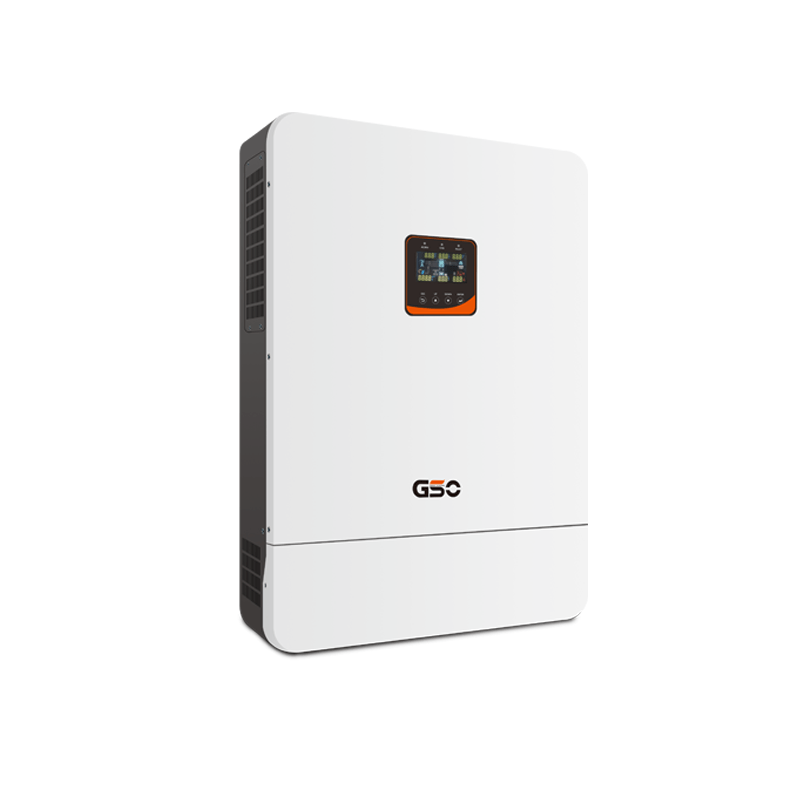
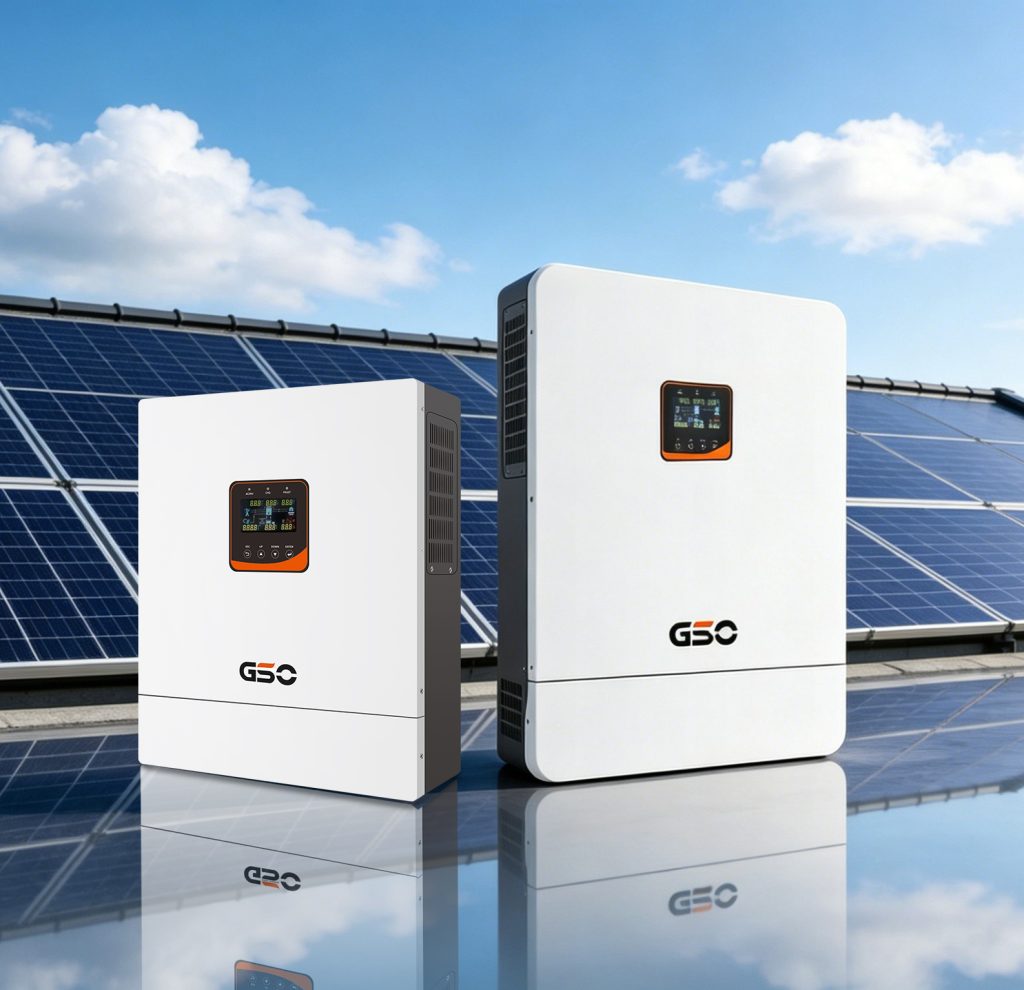
| Model | GST series three-phase |
| Standard | European Standard |
| Output Type | Three-phase |
| Life | 10 years |
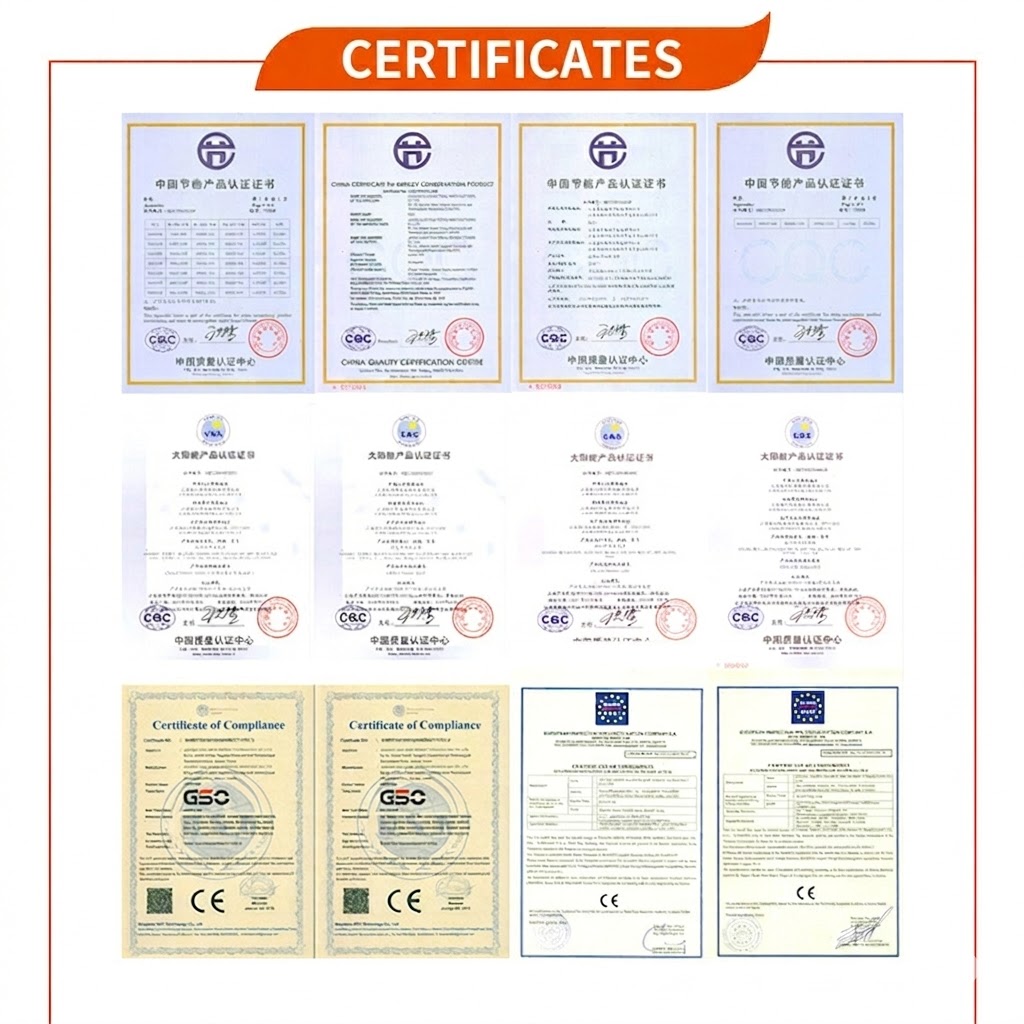
| Certificate | CE 、MSDS、UN38.3 |
Two independent MPPT inputs handle up to 9,000W each — 18,000W total on the GST48-12K5-P3. Each input tracks independently, maximising yield from arrays facing different orientations or with partial shading on one string.
Pure sine wave output across three phases at 400VAC. Suitable for three-phase loads including industrial motors, HVAC systems, and commercial equipment. Grid switchover in under 10ms keeps three-phase loads running without interruption.
Connect up to 9 GST three-phase inverters in parallel for three-phase AC output. Scale from 8.5kW to 112.5kW within the same product family — no system redesign as the project grows.
Solar only, grid priority, solar priority, or hybrid charging. Set at commissioning via APP or on-device. Change remotely without an on-site visit. Timed charge/discharge function allows segment scheduling for TOU tariff optimisation.
Supports battery-free startup from PV input alone. In emergencies where the battery is depleted or absent, the inverter draws directly from solar panels to maintain load power.
Real-time three-phase system data on your phone — solar input per MPPT, battery state, phase-by-phase load output, grid status, fault codes. Parameter modification remotely via APP. Wi-Fi and 4G modules supported.
| MODEL | GST48-8K5-P3 | GST48-10K5-P3 | GST48-12K5-P3 |
| INVERTER OUTPUT | |||
| Rated Output Power (W) | 8500 | 10500 | 12500 |
| Rated Output Power (VA) | 8500 | 10500 | 12500 |
| Maximum Peak Power (W) | 17000 | 21000 | 25000 |
| Load Capacity with Motors(HP) | 5 | 6 | 6 |
| Rated AC Output | 400 VAC Three phase, 50/ 60Hz | ||
| Output Voltage Waveform | Pure Sine Wave | ||
| Inverter and Bypass Switching Time | 10ms (typical) | ||
| Maximum Battery Inverter Efficiency | ≥93% | ||
| Overload Protection | 102%~110%,5min;110%~125%,10s;>125%,5s | ||
| BATTERY | |||
| Battery Type | Lithium / Lead-acid / User Defined | ||
| Rated Battery Voltage(VDC) | 48 | ||
| Battery Voltage Range(VDC) | 40~60 | ||
| Max.Mains Charging Current(A) | 100 | 120 | 120 |
| Max.Hybrid Charging Current(A) | 180 | 220 | 260 |
| Charging current error(ADC) | ±3 | ||
| Charging Short Circuit protection | Blown Fuse | ||
| PV INPUT | |||
| MPPT Quantity | 2 | ||
| Max. PV array power(W) | 6000+6000 | 7500+7500 | 9000+9000 |
| Max. PV input current(A) | 22+22 | ||
| Max. Open Circuit Voltage(VDC) | 800+800 | ||
| MPPT Voltage Range(VDC) | 200~650 | ||
| MPPT Tracking Efficiency | 99.9% | ||
| MAINS INPUT | |||
| Input Voltage Range(VAC) | Phase Voltage170~280,Line Voltage305~485 | ||
| Frequency Range(Hz) | 50/60±0.3 | ||
| Output Short Circuit Protection | Circuit breaker | ||
| Bypass Overload Phase Current(A) | 23 | 29 | 35 |
| SPECIFICATIONS | |||
| Dimensions (D*W*H)mm | 130*445*630 | ||
| Weight(kg) | 27 | ||
| Classification of waterproof | IP20 | ||
| Operating Temperature Range(C) | -10~55 | ||
| Storage Temperature Range(C) | -25~60 | ||
| Noise(dB) | <60 | ||
| Heat Dissipation | Forced air cooling (variable speed of fan) | ||
| COMMUNICATION | |||
| Embedded interface | RS485/CAN/USB/Dry contact | ||
| External module | WIFI/4G | ||
| CERTIFICATION | |||
| Safety | CE(IEC62109-1) | ||
| EMC | EN61000 | ||
| Note: Above data are subject to change without notice. Special voltage could be customized. | |||
| Application | Why GST three-phase fits |
|---|---|
| Commercial rooftop solar | Three-phase output balances load across all phases, dual MPPT handles large arrays |
| Industrial backup power | <10ms switchover protects sensitive three-phase equipment from grid interruptions |
| Large residential (>8kW load) | Single-phase inverters insufficient — three-phase handles high-draw appliances and EV charging simultaneously |
| Microgrids & remote sites | Off-grid capable, battery + solar + diesel generator input compatible |
| Multi-unit parallel installations | Scale to 112.5kW with 9-unit parallel — suitable for small commercial buildings |
A three-phase PV hybrid inverter manages solar generation, battery storage, and grid connection across three phases simultaneously. Unlike single-phase hybrid inverters suited to residential use, three-phase models are designed for larger loads — commercial buildings, industrial sites, and high-consumption homes — where balanced three-phase power distribution is required.
The GST three-phase series adds battery management to this equation. Rather than simply converting solar to AC, it stores surplus generation, draws from storage during peak-rate hours, and maintains seamless grid backup — all managed automatically based on your configured charging priority.
| GST Three-Phase Hybrid | GST Single-Phase Hybrid | Basic PV Inverter | |
|---|---|---|---|
| Output phases | Three-phase 400VAC | Single-phase 230VAC | Single or three-phase |
| Battery management | ✓ | ✓ | ✗ |
| Grid backup | ✓ <10ms switch | ✓ <10ms switch | ✗ |
| Dual MPPT inputs | ✓ up to 18kW PV | ✓ up to 11kW PV | ✓ varies |
| 4 charging modes | ✓ | ✓ | ✗ |
| Up to 9-unit parallel | ✓ three-phase output | ✓ single/three-phase | ✗ |
| Best for | Commercial / industrial / large homes | Residential | Basic solar only |
A hybrid PV inverter, such as the GSO GST series, is an all-in-one solar charge inverter that integrates three core functions: solar energy storage, utility (mains) charging, and AC sine wave output. Unlike standard inverters, it can manage power from both solar panels and the grid to charge batteries or power loads directly.
GSO’s three-phase hybrid inverters utilize advanced DSP control and high-speed algorithms to manage energy flow. They convert DC power from PV arrays into 400 VAC three-phase power for industrial or commercial use. The system supports four charging modes—Solar Only, Mains Priority, Solar Priority, and Hybrid—to ensure continuous power availability.
Yes, for users seeking energy independence and reliability. GSO hybrid inverters offer unique advantages:
Energy Flexibility: Timed charging and discharging allow users to save costs by using battery power during peak rate periods.
Emergency Reliability: They support battery-free output, allowing the system to start and run loads using only PV power in an emergency.
Scalability: Up to 9 units can be connected in parallel to meet high-power requirements.
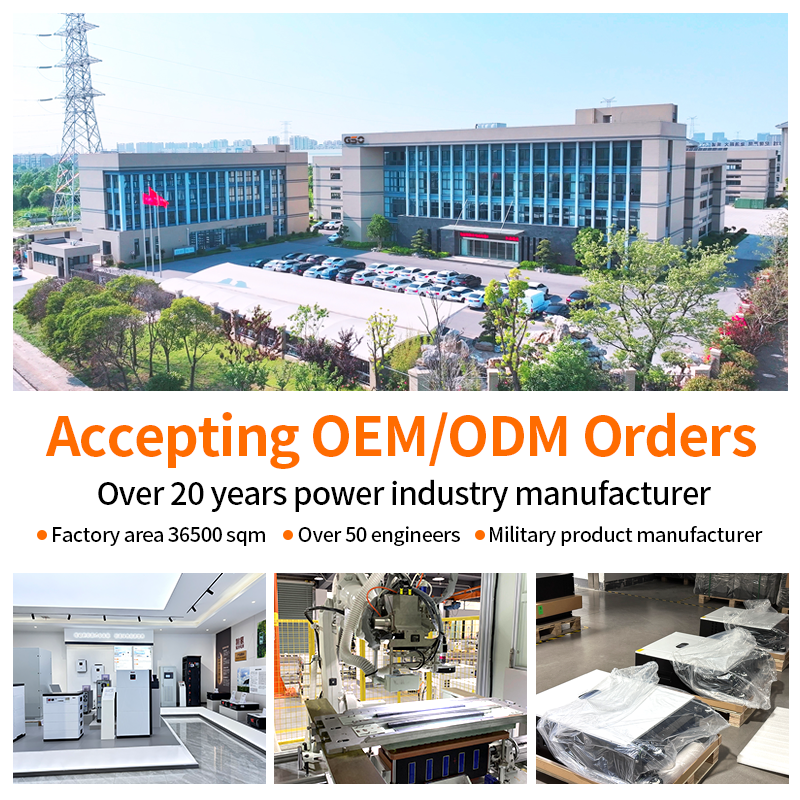
While industry averages vary, GSO products are designed for long-term industrial durability. Our high-frequency and low-frequency circuit designs focus on low failure rates and extended service life. As a National High-Tech Enterprise, GSO maintains strict quality standards (CE, IEC 62619) to ensure the internal components withstand rigorous operating environments.
The primary trade-off is higher initial complexity and cost compared to simple grid-tie systems. However, GSO mitigates this with an integrated modular design that requires fewer connection lines and smaller installation spaces, reducing overall labor and maintenance costs.
A 3000W inverter can run basic household loads (lights, laptops, TV). However, GSO’s entry-level GST series starts at a higher capacity of 3500W with a maximum peak power of 6000W. For a standard modern home with air conditioners or pumps, we recommend our 10kW or 12.5kW models to handle heavy startup surges.
The number of batteries depends on your desired backup time, but GSO’s hybrid systems arestandardized for 48 VDC battery banks. This typically requires either one 48V lithium batterypack or four 12V lead-acid batteries wired in series.

+(86) 18021324160
WhatsApp us