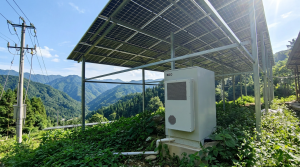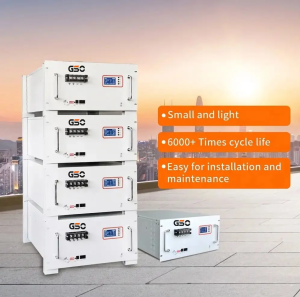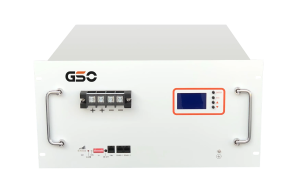

Outdoor solar batteries are easier to understand when viewed as complete energy systems rather than oversized batteries sitting outside a building. A modern unit can combine battery cells, an inverter, MPPT charging, battery management, controls, and communication in one enclosure. That changes both installation and everyday operation.
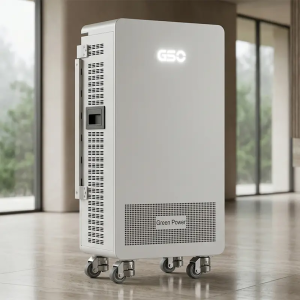
We at GSOpower see this integrated approach becoming particularly useful where energy storage needs to be deployed quickly, moved between locations, or used without building a permanent battery room. The GBP-Pro-II Series on our product platform provides a clear example of this architecture, combining storage and power-conversion equipment in a wheeled cabinet.
What You Are Actually Getting in an Outdoor Solar Battery
A conventional storage project may require separate batteries, an inverter, cables, protection equipment, and control components. An integrated outdoor unit brings many of those functions together before the equipment reaches the site.
Our GBP-Pro-II Series is described as an all-in-one inverter and battery system. LiFePO4 battery technology and combines the battery with a hybrid inverter, MPPT controller, and BMS protection. The referenced GSL48-3.5K configuration combines a 3,500 W hybrid inverter with a 5 kWh battery.
That integration matters because fewer separate components can mean a simpler deployment process. The system is pre-wired and factory tested, with PV and load connections made at the installation site.
An outdoor solar battery therefore should not automatically be compared with a battery module sold on its own. The more useful comparison is the complete package: stored energy, conversion equipment, controls, enclosure, and the way those parts are delivered as a working system.
How Sunlight Becomes Usable Power Inside One Unit
The energy path starts at the solar array. PV electricity enters the system through the MPPT stage, which tracks the array’s operating point so available solar generation can be converted efficiently for storage or immediate use.
The referenced GSL48-3.5K configuration has a single MPPT input and supports up to 5,500 W of PV array input. MPPT tracking efficiency reaches 99.9%, with DSP-based control for responding to changing sunlight conditions.
Once energy reaches the battery, the BMS monitors and protects the storage system. Later, the integrated inverter converts stored DC energy into usable AC power for connected loads.
Operating flexibility also comes from the control modes. The system supports grid-tied operation with anti-backflow, off-grid output, and hybrid operation. Charging can be configured for solar-only, grid-priority, solar-priority, or hybrid operation.
For users, the practical advantage is that solar generation, storage, and power delivery are coordinated inside one system instead of requiring separate pieces of equipment to be configured independently.
Why Wheels Change Where Energy Storage Can Go
Mobility is one of the clearest differences between this design and a permanently mounted battery cabinet. The GBP-Pro-II uses a wheel-type cabinet, so the unit does not depend on wall fixing for its basic placement.
That feature can be valuable for temporary installations, rental properties, remote locations, small commercial sites, or situations where the energy equipment may need to move later. The wheeled design makes it suitable for flexible deployment between locations.
Remote monitoring adds another layer of flexibility. Built-in Wi-Fi and Bluetooth are listed for the system, while Wi-Fi and 4G connectivity are described for app-based monitoring. Users can view battery status, PV input, load output, and fault information remotely.
Mobility does not mean the unit can simply be placed anywhere. Electrical connections, ventilation, temperature, weather exposure, and local installation requirements still need to be evaluated. A suitable installation environment is necessary—this product relies on IP20 protection and natural-air cooling, not active thermal management.
The 5 kWh Question: Energy Capacity vs. Power Output
One of the easiest mistakes is treating battery capacity and inverter output as the same thing. They answer different questions.
Capacity, measured in kWh, indicates how much energy the battery can store. Power, measured in W or kW, indicates how much electrical demand the inverter can serve at a given moment. A system with 5 kWh of storage and a 3,500 W inverter can therefore be assessed on both runtime and simultaneous load requirements.
The GBP-Pro-II product range includes 48 V and 51.2 V configurations with 100 Ah, 200 Ah, and 314 Ah nominal capacities. Its published expansion capability allows up to 20 modules in parallel, with up to 48 noted for special applications.
That modularity means an outdoor solar battery can be configured around the required energy level rather than forcing every project into one fixed size. We would first identify the loads and expected runtime, then determine whether the available inverter output and battery capacity match those requirements.
Where This Kind of System Makes the Most Sense
A portable solar power station becomes particularly interesting when the user values deployment flexibility as much as storage itself. A permanent home installation may prioritize fixed mounting and dedicated electrical infrastructure, while a temporary site may benefit more from an integrated wheeled system.
Our product information positions the GBP-Pro-II architecture for residential and commercial use and highlights temporary installations, remote sites, and small commercial locations. The integrated design can reduce the need to source and coordinate separate inverter and battery components.
We also consider the operating objective before choosing the configuration. Emergency backup, solar self-consumption, off-grid operation, and temporary power can all require different capacity and output combinations.
Our outdoor range is therefore best understood as an integrated deployment option rather than simply another battery format. For someone investigating outdoor solar batteries, the key question is whether mobility, integrated power conversion, modular storage, and remote monitoring solve a real site requirement.
For us, the value of the design lies in putting those functions together without losing the ability to scale the storage configuration. We give users a system architecture that can be evaluated according to actual loads, solar input, runtime, and deployment conditions.
The result is a simpler way to think about outdoor storage: solar provides the energy source, the battery holds it, the inverter makes it usable, and the integrated enclosure brings the system to the location where power is needed.