
A portable solar battery should be judged by what it can actually do, not by the largest number printed on its product page. A high-capacity unit may still be unsuitable if its inverter cannot run the intended appliances, its solar input is poorly matched to the PV array, or its weight makes relocation unrealistic. We therefore recommend reading the specifications in relation to the job, because capacity, power, charging, battery construction, and mobility all answer different buying questions.
The First Number to Check Is Not Battery Capacity
Start with the appliances. Write down which devices must operate simultaneously and which can be used separately. A refrigerator, router, lighting circuit, laptop, pump, or power tool can create very different demands.
That information establishes the required inverter output before battery capacity enters the discussion. A buyer who starts with “How many kWh do I need?” may overlook the more immediate question: “How many watts must the system deliver at the same time?”
The GBP-PRO-II integrates a 3,500 W hybrid inverter with a 5 kWh LiFePO4 battery. This configuration highlights why power and storage should be evaluated separately—not reduced to a single capacity figure.
A Large Battery Can Still Be Too Weak
Output power determines what the system can operate simultaneously. Battery capacity determines how long available energy can support those loads. Neither number replaces the other.
Consider a simple example. A system might have enough stored energy for several hours of moderate consumption but lack sufficient inverter output for a high-power appliance. Increasing battery capacity would not solve that limitation; a higher power capability would be the relevant specification.
Output power determines how many appliances you can run simultaneously, while capacity affects how long they can run. Modular storage options range from 5 kWh to 30 kWh.
For anyone comparing a portable solar battery, this distinction is one of the most important checks on the specification sheet. We look at both kW and kWh before deciding whether a system is appropriately sized.
Solar Charging Has Its Own Specification
Solar compatibility cannot be assumed simply because a product is described as solar-ready. The PV input voltage, current, maximum solar-array power, and MPPT configuration determine whether the proposed panels can charge the system correctly.
The GBP-PRO-II integrates an MPPT controller with a single input supporting up to 5,500 W of PV array and tracking efficiency of 99.9%.
That specification should be compared against the actual PV design. A panel array that exceeds the permitted input range is not made suitable by the battery’s storage capacity. We would check the electrical characteristics of the panels and the inverter’s permitted PV range before purchasing either component as part of the same system.
Battery Chemistry Tells You What Repeated Use Will Look Like
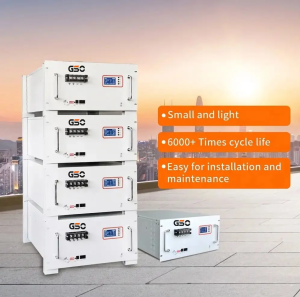
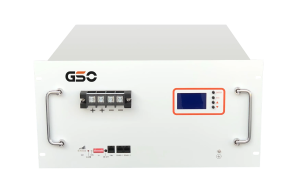
Capacity tells us how much energy is available, but battery chemistry and operating specifications tell us more about repeated use. The referenced system uses LiFePO4 cells and lists a cycle life of 6,000 or more cycles for the battery series. It also specifies natural-air cooling and CAN/RS485 communication.
Temperature specifications deserve attention when equipment may move between indoor and outdoor environments. Charging and storage temperature ranges differ, with the charging range varying depending on whether the heating function is used.
Expansion can matter for buyers whose requirements may increase. The referenced battery system supports up to 20 modules in parallel, with a higher configuration identified for special applications.
Portability Needs a Real-World Definition
“Portable” can mean several things. A small unit designed for hand carrying is very different from a wheeled cabinet that can be moved between rooms or sites but requires equipment handling.
We position the GBP-PRO-II—with its wheel-type cabinet—for temporary installations, rental properties, and small commercial sites. Its physical design is therefore integral to the product specification, not merely an aesthetic feature.
Weight confirms the distinction. Published configurations range from 48 kg to 148 kg depending on voltage and capacity. We would therefore ask how often the system will actually move, who will move it, and whether wheels provide enough mobility for the intended site.
Operating Modes Matter Once the Power Station Is in Use
A system’s usefulness continues after installation. The referenced product supports grid-tied operation with anti-backflow, off-grid output, and hybrid operation. It also provides solar-only, grid-priority, solar-priority, and hybrid charging modes.
Those settings determine how the system responds to available PV, grid electricity, battery energy, and connected loads. A user seeking emergency backup may prioritize different behavior from someone focused on maximizing solar self-consumption.
Remote visibility can be equally practical. The cloud-based App monitoring, real-time battery, PV, and load data, parameter adjustment, and Wi-Fi and 4G support.
Read the Numbers as One System Before You Buy
The strongest specification is not necessarily the highest one. We would match five areas: inverter output to the loads, battery capacity to required runtime, PV input to the solar array, battery characteristics to expected cycling, and physical design to the location.
We at GSOpower combine the hybrid inverter, LiFePO4 battery, MPPT controller, and BMS in one pre‑wired unit as our all‑in‑one architecture. That approach can reduce the need to source and interconnect separate core components, which is particularly relevant for temporary or mobile installations.
A good buying decision therefore begins with the intended workload and ends with the complete specification. We provide a useful example of why an integrated system should be evaluated as a complete portable solar power station rather than as a battery with accessories.
For buyers comparing a portable solar battery, the right specification depends on the application. A camping setup, emergency backup system, temporary commercial installation, and mobile worksite may require very different combinations of output, capacity, PV input, mobility, and control. At GSOpower, we ensure these specifications work in concert—not in competition.
The most useful question before purchase is simple: can the system deliver the required power, store enough energy, recharge effectively from the available solar source, and be moved or installed as intended? If the answer is yes across all four areas, the specification sheet is doing its job as a buying tool rather than merely a collection of impressive numbers.