- +(86) 514-87520588
- norah@gsopower.com
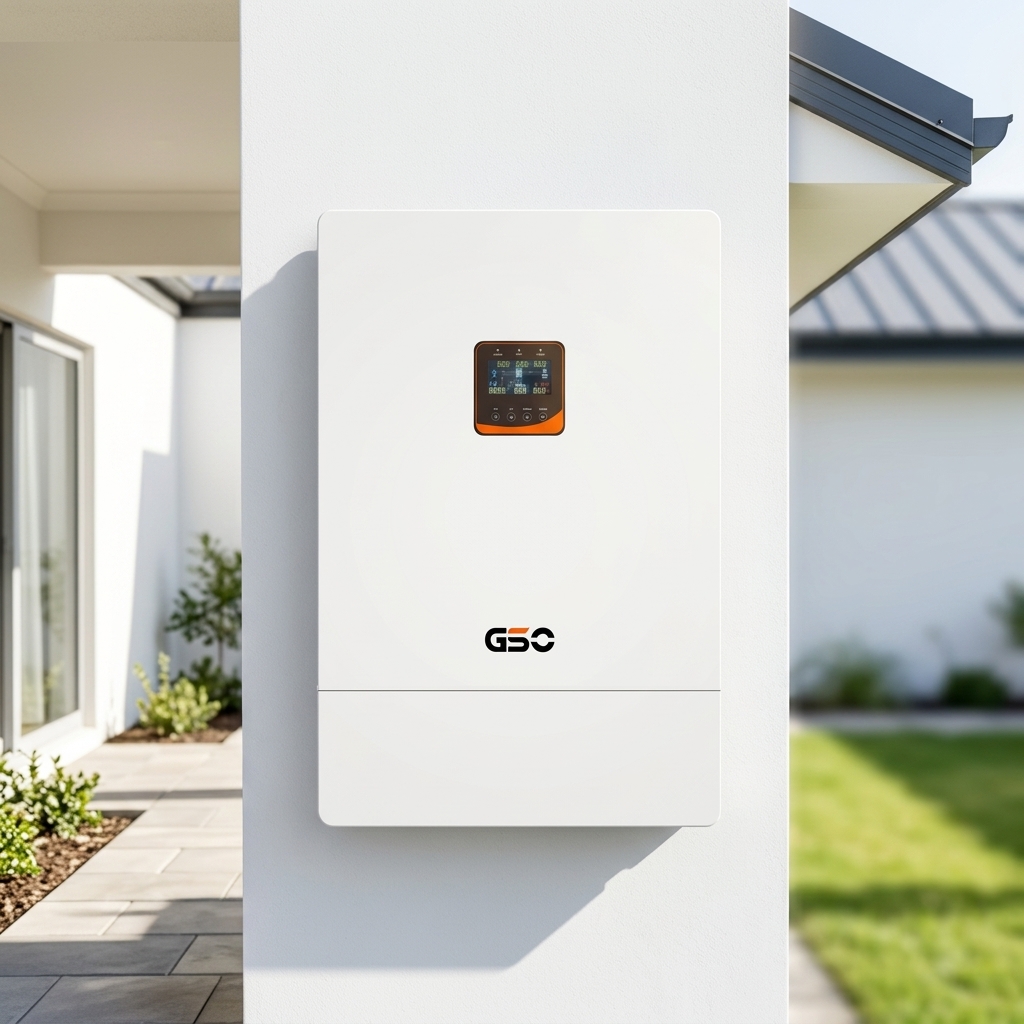


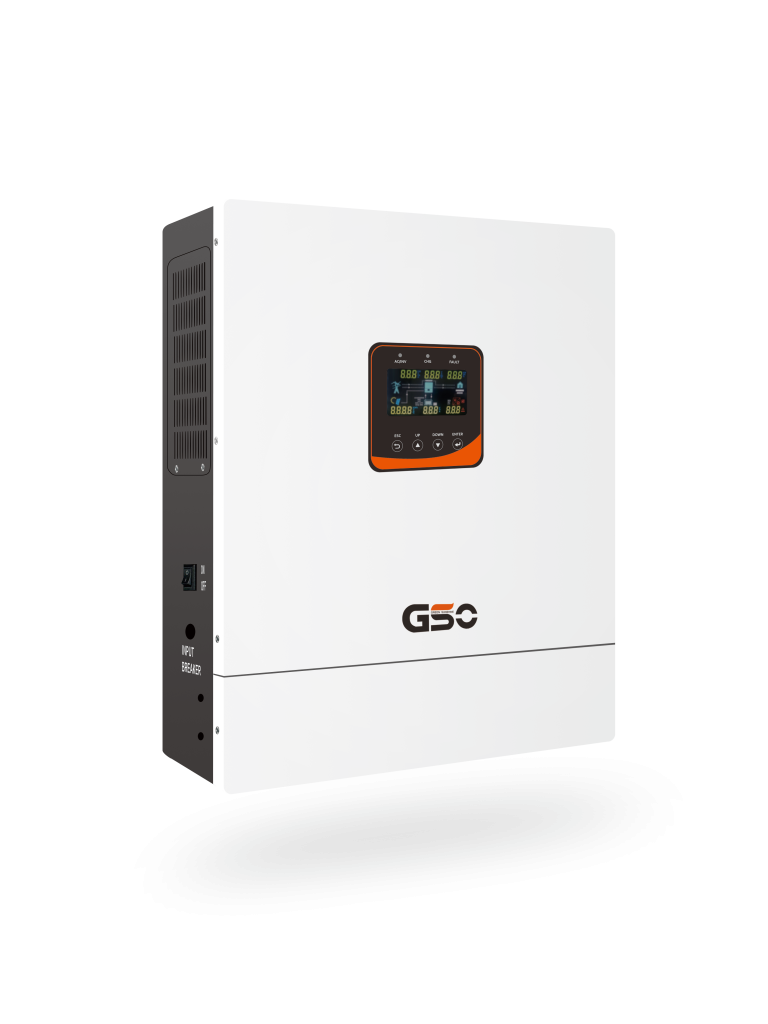
| Model | GST Series |
| Standard | US Standard |
| Output Type | Split-phase |
| Life | 10 years |
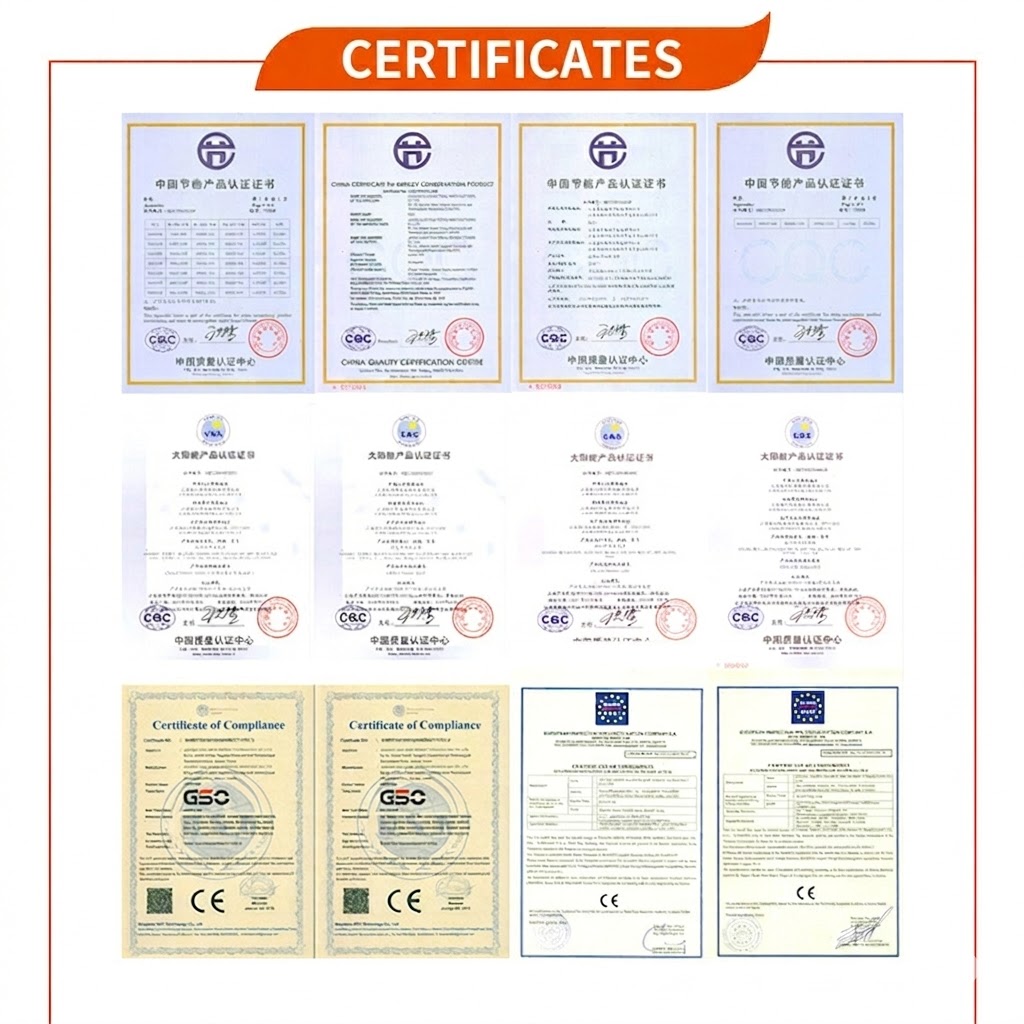
| Certificate | CE 、MSDS、UN38.3 |
Solar only, grid priority, solar priority, or hybrid. Set once at commissioning via the APP or on-device — the inverter manages the logic automatically from that point. Change modes remotely without an on-site visit.
When the grid fails, the GST switches to battery output in under 10ms. Fast enough that fridges, routers, and sensitive electronics don't register the interruption. No manual switching, no UPS required.
DSP control with advanced algorithms tracks the solar array's maximum power point continuously. At 99.9% efficiency, virtually no generation is lost between the panel and the battery — every watt your panels produce gets stored or used.
Connect up to 9 GST inverters in parallel for single-phase or three-phase AC output. Suitable for larger homes, small commercial buildings, and sites that need phased capacity expansion.
The GST supports PV-only startup with no battery connected. In an emergency, the inverter draws directly from solar panels to power loads — even if the battery is absent or fully depleted.
CE certified under IEC62109-1 and EN61000. Output voltage adjustable between 200/208/220/240VAC — compatible with European, Australian, and most Asian grid standards.
| MODEL | GST48-6600-U | GST48-8K5- U | GST48-10K5-U | GST48-12K5-U |
| INVERTER OUTPUT | ||||
| Rated output power (W) | 6600 | 8500 | 10500 | 12500 |
| Rated output power (VA) | 6600 | 8500 | 10500 | 12500 |
| Maximum Peak Power (W) | 12000 | 13000 | 126000 | 19000 |
| Load Capacity with Motors (HP) | 4 | 5 | 6 | 7 |
| Rated AC Output | 120Vac,50/60Hz 120/240Vac(single phase/split phase),50/60Hz | |||
| Output Voltage Waveform | Pure Sine Wave | |||
| Inverter and Bypass Switching Time | 10ms channels | |||
| Parallel Capacity | 9 | |||
| Maximum Battery Inverter Efficiency | 93% | |||
| Overload Protection | 102%~110%,5min;110%~125%,10s;>125%,5s | |||
| BATTERY | ||||
| Battery Type | Lithium / Lead-acid / User Defined | |||
| Rated Battery Voltage (VDC) | 48 | |||
| Battery Voltage Range (VDC) | 40~60 | |||
| Max.MPPT Charging Current (A) | 120 | 200 | 220 | 240 |
| Max.Mains Charging Current(A) | 60 | 100 | 120 | 120 |
| Max.Hybrid Charging Current (A) | 120 | 200 | 220 | 240 |
| Charging current error (ADC) | ±3 | |||
| Charging Short Circuit protection | Blown Fuse | |||
| PV CHARGING | ||||
| MPPT Quantity | 1 1 | 2 | ||
| Max. PV array power (W) | 6600 | 6600+6600 | 6600+6600 | |
| Max. PV input current (A) | 13 | 22 | 22+22 | |
| Max. Open Circuit Voltage (VAC) | 500 | 500+500 | ||
| MPPT Voltage Range (VDC) | 120~ | 450 | ||
| MPPT Tracking Efficiency | 99.9% | |||
| MAINS INPUT | ||||
| Input Voltage Range (VAC) | 90~140 | |||
| Frequency Range (Hz) | 50/60±0.3 | |||
| Output Short Circuit Protection | Circuit breaker | |||
| Bypass Overload Current(A) | 40 | 50 | 63 | |
| SPECIFICATIONS | ||||
| Dimensions (D*W*H)mm | 130*150*455 130*445*630 | 130*445*630 | ||
| Weight (kg) | 11 | 12 | 27 | |
| Classification of waterproof | IP20 | |||
| Operating Temperature Range (C) | -10~ | 55 | ||
| Storage Temperature Range(C) | -25~60 | |||
| Noise (dB) | <60 | |||
| Heat Dissipation | Forced air cooling (variable speed of fan) | |||
| COMMUNICATION | ||||
| Embedded interface | RS485 / CAN / USB/ Dry contact | |||
| External module | WIFI/4G | |||
| CERTIFICATION | ||||
| Safety | CE(IEC62109-1) | |||
| EMC | EN61000 | |||
| Note: Above data are subject to change without notice.Special voltage could be customized | ||||
| GST Solar Hybrid | Basic String Inverter | Off-Grid Inverter | |
|---|---|---|---|
| Connects to solar panels | ✓ | ✓ | ✓ |
| Manages battery storage | ✓ | ✗ | ✓ |
| Stays connected to grid | ✓ | ✓ | ✗ |
| Works during grid outage | ✓ | ✗ | ✓ |
| 4 charging mode options | ✓ | ✗ | ✗ |
| APP remote monitoring | ✓ | Rarely | Rarely |
| Up to 9-unit parallel | ✓ | ✗ | Some models |
A solar hybrid inverter manages three energy sources simultaneously — solar panels, a battery bank, and the grid — and decides in real time which source powers your home and when. Unlike a basic string inverter that only converts solar to AC, or a battery inverter that only manages storage, a hybrid inverter does all three jobs in one unit.
The GST series takes this further with 4 configurable charging modes, allowing your installer or end user to define exactly how the system behaves — solar only, grid priority, solar priority, or hybrid charging — based on local tariffs, grid reliability, and daily usage patterns.
Solar Only The battery charges exclusively from solar panels. Grid power is not used for charging. Best for off-grid setups or customers who want zero grid consumption.
Solar Priority Solar charges the battery first. If solar generation is insufficient, the grid supplements. Best for maximising self-consumption while maintaining reliable charging.
Grid Priority The grid charges the battery first, solar supplements. Best for markets where grid electricity is cheap at night and solar feed-in rates are low during the day.
Hybrid (Solar + Grid) Both solar and grid charge simultaneously at maximum available current. Best for fast charging requirements or high-load commercial applications.
A hybrid solar inverter is an advanced, all-in-one power conversion system that integrates a solar charge controller, a battery inverter, and a battery charger into a single unit. Unlike traditional inverters, hybrid systems manage energy from multiple sources—including solar panels, utility grids, and battery storage—to ensure a continuous and efficient power supply.
A hybrid inverter acts as the “brain” of a solar energy system by converting the direct current (DC) produced by solar panels into usable alternating current (AC) for home or business appliances while simultaneously managing battery charging. It optimizes energy use by prioritizing solar power, storing excess energy for later use, or drawing from the grid when needed.
A hybrid inverter operates by monitoring energy production and consumption in real-time. It uses Maximum Power Point Tracking (MPPT) to extract the most power possible from solar arrays. It then directs that power to the load, uses it to charge batteries, or exports it to the grid based on the selected operating mode, such as Solar Priority or Mains & Solar hybrid charging.
A single-phase hybrid inverter is designed for standard residential or small commercial electrical systems that use a single AC voltage wave. For example, high-performance series like the GST series offer rated output powers ranging from 3500W to 12500W and are compatible with 230V or 120V systems. These units often feature parallel functionality, allowing up to nine machines to work together for increased capacity.
Yes, a hybrid inverter offers significantly more flexibility than a standard grid-tie or off-grid inverter. While a normal inverter only converts DC to AC, a hybrid inverter provides:
Energ Independence: The ability to store solar energy for use during the night or during power outages.
Multile Charging Modes: Flexibility to charge via solar, mains, or a combination of both.
Integrated Design: Reduced installation space and fewer connection lines compared to separate controller and inverter setups.
The primary difference lies in the output voltage and wiring. Single-phase inverters typically provide a single 220V-240V output. Split-phase inverters, common in North American markets, can provide both 120V and 240V outputs from the same unit, making them suitable for standard household circuits and heavy-duty appliances.
Solar panels are connected to the PV input terminals of the hybrid inverter. Most modern units feature dual MPPT trackers to allow for different panel orientations. To ensure safety and reliability, it is recommended to use a PV combiner box between the solar array and the inverter to consolidate multiple strings and provide lightning protection.

+(86) 18021324160
WhatsApp us