
Searching for the best battery for a solar system can quickly become confusing. One product may offer a larger capacity, another may advertise a longer cycle life, and a third may cost less. None of those numbers, however, tells you whether the battery is right for your home or business.
We at GSOpower believe the better question is: what does the battery need to accomplish every day? Once that answer is clear, capacity, power, chemistry, inverter compatibility, installation format, and expansion become much easier to evaluate.
The “Best” Battery Depends on What You Want Solar Storage to Do
A battery designed for evening solar self-consumption does not necessarily need the same characteristics as one intended for backup or commercial peak shaving.
Homeowners who generate excess solar power during the day may want to store that energy and use it after sunset. Someone focused on backup may instead care about how much of the household load can remain powered during an outage and for how long.
Commercial facilities introduce another layer. A factory or commercial building may use storage to reduce demand peaks, shift energy consumption, or coordinate solar generation with larger electrical loads. The required battery therefore depends on the operating objective, not simply the size of the solar array.
Our energy storage portfolio reflects this difference. We provide residential battery configurations as well as larger C&I systems, so we approach battery selection according to the application’s operating requirements rather than assuming one configuration fits every project.
Turn Your Electricity Habits Into a Battery Specification
Your electricity profile provides a much better starting point than a product ranking. Look at how much electricity you use, when you use it, and which loads you want the battery to support.
Capacity answers the question of how much energy can be stored, while power answers how quickly that energy can be delivered. A household may need enough stored energy to cover several hours of evening consumption but also require sufficient output to operate appliances simultaneously.
Solar production matters as well. If the array frequently generates more electricity than the building consumes during daylight hours, storage can shift part of that surplus into periods of higher demand. The battery should therefore be sized around the expected energy flow rather than simply matched to the solar panel capacity.
Our product information provides a useful example of this calculation. A 48 V, 100 Ah battery has a nominal energy capacity of approximately 4.8 kWh, calculated from voltage multiplied by amp-hour capacity. Actual usable energy depends on the solar battery storage system‘s operating limits and specifications.
Use System Compatibility to Eliminate the Wrong Options
Once you know the energy requirement, the next question is whether the battery can actually work with the rest of your solar system.
An apparently suitable battery can become unsuitable if its voltage range, charge and discharge limits, communication protocol, or inverter compatibility do not match the system. Hybrid inverter projects are particularly dependent on coordinated battery and inverter operation.
We design residential storage around this integration requirement. Our published product information lists compatibility with inverter brands including Growatt, Deye, Victron, Voltronic, Sofar, and GoodWe. Buyers should still verify the exact battery-inverter combination before installation because compatibility can depend on the specific model and communication configuration.
Power requirements become even more significant in commercial installations. A C&I system may combine battery racks, PCS equipment, energy management, and other control components. In that environment, selecting the battery independently from the power-conversion architecture can create a system mismatch.
That is why we evaluate the storage battery together with the equipment responsible for charging, discharging, monitoring, and controlling it. A technically strong battery is only useful when the complete system can operate it correctly.
Choose the Battery Format That Fits the Installation
Physical design can quietly determine whether a battery is practical. A homeowner with limited wall or floor space may prefer a compact modular configuration, while a larger commercial facility may have dedicated equipment areas for multiple battery racks.
Expansion is another useful dividing line. A household may initially need a relatively modest amount of storage but expect electricity consumption to increase later. A modular battery configuration can make more sense in that situation than buying substantially more capacity than necessary on day one.
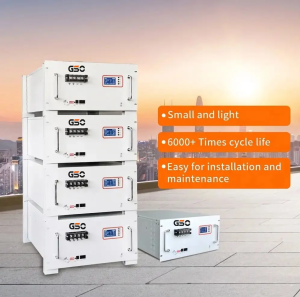
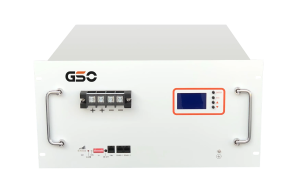
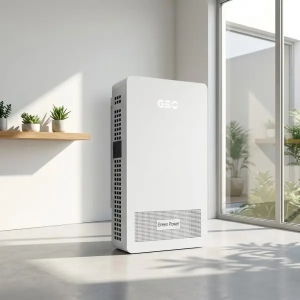
Our residential range includes wall-mounted and stacked LiFePO4 configurations, while our C&I solutions include rack-mounted systems and larger cabinet-based designs. The appropriate format depends on available space, capacity requirements, installation conditions, and the intended growth of the project.
Thermal management should also be considered according to scale and operating conditions. Larger commercial systems can have substantially different thermal and installation requirements from residential batteries. Our C&I portfolio includes liquid-cooled energy storage configurations for applications requiring more advanced thermal management.
Compare Batteries Only After You Know What Matters
At this stage, comparing products becomes much more meaningful. Instead of asking which battery has the biggest capacity or the lowest price, compare the specifications that directly affect your intended use.
For residential projects, we would examine usable energy, continuous output, battery chemistry, inverter compatibility, installation format, expansion capability, monitoring, warranty conditions, and the expected operating profile.
LiFePO4 is widely used in stationary energy storage, but chemistry alone should not determine the purchase. Battery management, depth of discharge, operating temperature, protection functions, and manufacturer-specific performance conditions also influence how the system should be evaluated.
Our published residential specifications, for example, identify LiFePO4 cells and state a cycle-life figure of 6,000+ cycles under specified test conditions. That number should be compared only with competing products using equivalent test conditions rather than treated as a universal measure of all LiFePO4 batteries.
Commercial buyers need to extend the comparison beyond the battery itself. PCS capacity, rack configuration, cooling strategy, EMS integration, installation environment, and future expansion can all influence whether a particular storage architecture fits the facility.
The most reliable selection process is therefore surprisingly simple: define the job, quantify the energy and power requirement, confirm system compatibility, check the physical configuration, and then compare products against those requirements.
At GSOpower, we use that same principle when evaluating residential and C&I storage solutions. We would rather match the battery architecture to the customer’s actual energy profile than recommend a larger or more complicated system simply because its headline specifications look impressive.
The best batteries for solar power storage are ultimately the ones that solve the right problem. If a battery matches your energy usage, power demand, inverter, installation environment, and future plans, its value comes from how well the whole system works—not from having the most impressive specification sheet.