
Buying battery storage for a solar array starts with a deceptively simple question: what do you want the stored electricity to accomplish? More evening self-consumption, backup during outages, lower peak-period consumption, or a combination of these goals can lead to very different system choices. We recommend defining that purpose before comparing battery models.
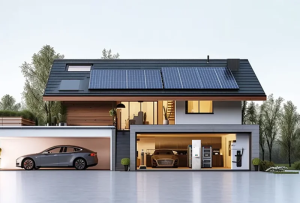
First Decide What You Want the Stored Energy to Change
A battery earns its place in a solar system by changing the timing of energy use. Excess PV generation can be stored instead of being immediately consumed, then released when solar production is lower. Grid charging can also be part of the strategy where the system and local electricity rules support it.
GSOpower offers operating modes including PV priority, load priority, and grid-tie priority. Its storage systems also support peak shaving and valley filling—showing that the same basic battery technology can serve different operating objectives.
For a homeowner, the priority might be keeping essential household loads supplied after sunset. A factory may care more about reducing demand peaks. Start with the desired outcome, because that determines what specifications actually matter.
Read Your Solar System as an Energy Pattern
Battery size should follow the relationship between solar generation and electricity consumption, not simply the size of the PV array. A large solar installation does not automatically require the largest available battery.
Look at a typical day. Identify when the panels produce surplus energy, when the building consumes the most electricity, and how much energy must remain available after solar generation declines. That pattern gives a more useful starting point for storage sizing.
Power deserves separate attention. Kilowatt-hours describe stored energy, while kilowatts describe how quickly the system can deliver or absorb energy. A battery may have substantial energy capacity yet still be unsuitable if its output cannot support the loads operating together.
Residential storage configurations range from 5 kWh to 30 kWh, while commercial and industrial solutions include rack-mounted systems with PCS converters and scalable power ranges. These examples reinforce the need to match architecture to the application rather than selecting capacity in isolation.
Make the Battery and Inverter Work as One
A battery purchase should never be completed by checking the battery datasheet alone. The inverter or PCS controls how stored DC energy interacts with the loads and grid, so communication and electrical compatibility have to be confirmed before installation.
Communication protocols are particularly relevant in an integrated system. CAN/RS485 communication is supported, with compatibility across more than 65 inverter models.
That is why we would ask for the exact inverter model, battery voltage range, communication method, charging limits, discharge requirements, and intended operating mode before finalizing a configuration.
The same principle applies to a LiFePO4 solar battery. The chemistry can be suitable for stationary storage, but the finished battery still needs appropriate control, protection, and communication with the rest of the power system.
Judge the Battery From Inside the Cabinet
A product label tells you the chemistry and nominal capacity, but it does not tell you everything about the equipment you are buying. Battery cells, the Battery Management System, protection functions, enclosure, and monitoring capability all contribute to the finished storage system.
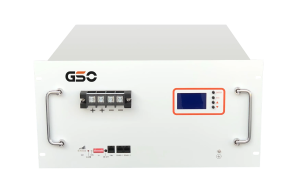
The BMS deserves particular attention because it monitors battery conditions and manages protective functions. The reference material identifies safeguards against overcharging, over-discharging, and short circuits, together with smart monitoring features on specified systems.
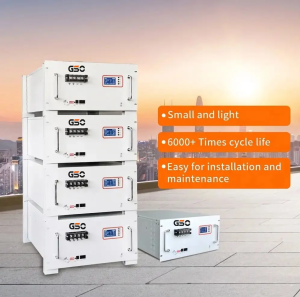
Cycle-life figures also need context. A quoted number should be considered alongside the conditions under which it is specified, rather than treated as an automatic guarantee of service life. LiFePO4 solutions deliver cycle-life figures above 6,000, with one residential series reaching up to 26,000 cycles.
For a buyer, the practical lesson is straightforward: compare complete battery specifications, not one impressive number.
Let the Site Shape the Equipment Choice
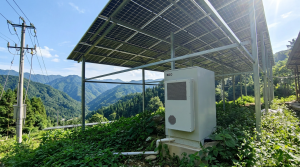
The physical location can reduce otherwise attractive options. An indoor residential installation, an exposed outdoor cabinet, and a large commercial energy-storage project do not necessarily require the same enclosure or system arrangement.
Configurations range from indoor IP20 to outdoor IP54 solutions, with systems available for residential, commercial, industrial, off-grid, and remote applications.
Site conditions should therefore be discussed before equipment is selected. Available floor or wall space, environmental exposure, access for installation, and the required system architecture can influence whether a wall-mounted battery, rack-mounted configuration, outdoor cabinet, or containerized solution makes sense.
We also recommend considering service access at this stage. A technically suitable battery is less attractive if inspection, commissioning, or future maintenance becomes unnecessarily difficult at the actual site.
Buy for the System You May Need Later
A storage purchase does not always end with the first battery. Household demand can change, while commercial projects may add loads or expand their renewable generation. Modular equipment can make that transition easier if expansion is supported by the original architecture.
Modular residential systems are available alongside C&I configurations built around rack-mounted battery clusters and PCS equipment. The residential portfolio includes wall-mounted and stacked solutions, while larger systems extend to liquid-cooled cabinets and containerized BESS.
Expansion should still be planned rather than assumed. Ask how additional battery modules are integrated, whether the inverter or PCS has sufficient capacity, and what operating limits apply after expansion.
This is also where total project cost becomes more meaningful than the initial battery price. Installation work, compatible power-conversion equipment, communications, monitoring, and future expansion requirements can all affect the eventual investment.
What a Good Purchase Decision Looks Like
A sound solar battery storage purchase begins with the load profile and ends with a system that can perform the intended job. Capacity and power should reflect actual energy patterns; the battery and inverter should communicate correctly; the BMS and protection architecture should be understood; and the physical installation environment should fit the equipment.
Our approach at GSOpower is to treat residential and C&I storage as system-design questions rather than isolated battery purchases. The company’s current portfolio covers residential batteries and hybrid inverters as well as rack-mounted, liquid-cooled, and containerized commercial systems
A helpful rule of thumb for customers is to enquire what the storage system needs to perform before worrying about which battery is ideal. With that question answered, it’s much easier to determine the right power rating, enclosure, extension route, inverter connection, energy capacity, and monitoring.
The right solar panels battery storage system is therefore the one that fits the electricity pattern, equipment architecture, site, and operating objective—not simply the one with the biggest capacity or the lowest quoted price.