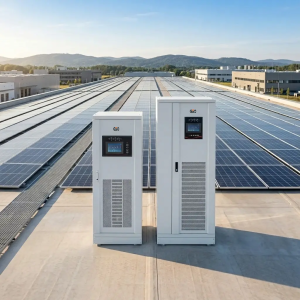

Sizing a hybrid inverter solar system starts with the loads your property must serve, not the number of roof panels. The inverter should handle normal demand, motor surges, battery charging, and site rules. In larger homes, workshops, farms, and commercial buildings, a three phase hybrid inverter must also distribute power across phases without avoidable imbalance.
Begin with the load profile
Collect utility bills, interval data, or main-panel measurements. Note peak demand, daytime and evening use, seasonal changes, and circuits that must remain available during an outage. Recheck these figures whenever equipment or operating schedules change. Refrigeration, pumps, air conditioning, communications, and security loads may follow different patterns.
Running watts describe normal use; starting watts describe a motor or compressor surge. Add loads that may operate together and compare them with continuous output. Check the largest surge against peak rating, leaving headroom if a workshop motor and heat pump can start together.
Why phase configuration matters
A single-phase inverter supplies one AC waveform. A three phase hybrid inverter supplies three coordinated waveforms for commercial equipment, pumps, elevators, and three-phase buildings. Spread loads evenly; one phase can overload even when total demand looks acceptable.
Confirm site voltage, frequency, neutral arrangement, and utility requirements. Some projects use a dedicated three-phase inverter; others parallel compatible units. Documentation must cover synchronization, phase rotation, protection, and backup operation.
Match PV input to the inverter
The PV array should serve daytime loads and recharge the battery within the inverter’s limits. Check maximum array power, open-circuit voltage, short-circuit current, MPPT range, and tracker count. Different roof orientations may need separate MPPT inputs.
Oversizing within the approved DC limit can improve cloudy-day production; excess DC power can cause clipping or violate specifications. The hybrid inverter solar design must account for cold-weather voltage, heat-related output, panel data, and cable losses.
Calculate battery energy and power
Battery energy is measured in kilowatt-hours. Multiply critical load by backup hours, then allow for usable depth of discharge, inverter efficiency, temperature, and emergency reserve. Nameplate capacity does not equal usable energy.
Battery power is a separate limit. Confirm that the battery and inverter can deliver required current and the planned PV charge rate. Check voltage range, continuous current, communication, and protection. For daily cycling, compare lifetime energy rather than upfront price alone.
Product Spotlight
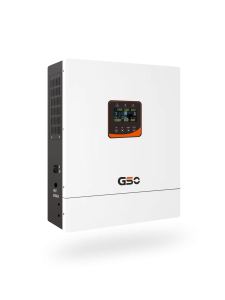
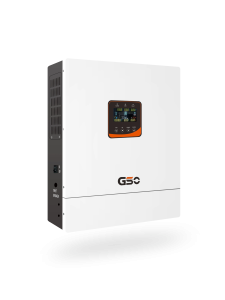
GSOpower’s GST Series US Standard Split-phase Hybrid Inverter provides a practical reference point for sizing a residential or small commercial system. Available output classes include 6.6kW, 8.5kW, 10.5kW, and 12.5kW, with a 48V battery platform and pure sine wave output. It supports 120V or 120/240V configurations, subject to the selected model and local electrical requirements.
Its four charging modes are Solar Only, Solar Priority, Grid Priority, and Hybrid. DSP control tracks PV at a listed 99.9% MPPT efficiency. Typical inverter and bypass switching is 10ms. Up to nine compatible units can operate in parallel for larger single-phase or three-phase output where permitted.
The GST series offers PV-only startup when sunlight is available without a connected battery. RS485, CAN, USB, and dry-contact interfaces support communication; optional WiFi or 4G modules enable remote monitoring for commissioning and service.
Account for operating modes
Charging priority changes system behavior. Solar Only avoids grid charging; Solar Priority favors self-consumption; Grid Priority uses low-cost overnight power; Hybrid charging restores the battery faster when both sources are available.
Choose the mode after reviewing the tariff, export compensation, outage frequency, and household schedule. A system that exports inexpensive midday energy and buys costly evening electricity may benefit from more battery capacity. A site with stable grid service may prioritize bill savings over long backup duration.
Plan for expansion and phase balance
Future EVs, heat pumps, refrigeration, or machinery may raise energy and peak power. Leave room in the inverter and switchgear plan or confirm later paralleling. A three phase hybrid inverter arrangement must preserve synchronization and balanced protection during expansion.
Reserve space, cable routes, ventilation, and service access before installation. IP20 equipment belongs indoors in a protected location. Document firmware, communication addresses, phase order, and operating limits for future technicians.
Commissioning checks after sizing
Before energizing, verify polarity, insulation, grounding, breaker ratings, terminal torque, and approved PV and battery voltage. Test operating modes, battery charge and discharge, grid import, export limits, and backup transfer with representative loads.
Monitor the first weeks. Compare actual peak demand with the estimate, watch phase currents, and review alarms or unexpected grid imports. Adjust settings or revisit capacity if operating data differs.
Conclusion
The correct size for a three phase hybrid inverter follows measured demand, surge behavior, PV limits, battery capability, phase balance, and expansion plans. A hybrid inverter solar design is easier to manage when each rating matches a real load. A sizing review with GSOpower can turn those measurements into a practical site configuration.