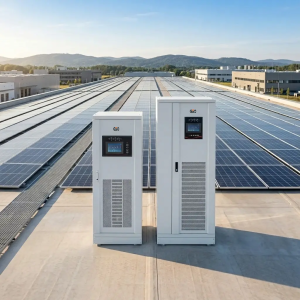

Solar panels produce electricity on their own schedule, while a building consumes it on another. A solar hybrid inverter helps connect those schedules by working with the array, a battery, and the grid. At GSOpower, our GST Series illustrates one version of the idea: its individual units provide split-phase output, and the product page also describes parallel arrangements for three-phase AC. That distinction matters to anyone searching for a three phase hybrid inverter, because the word hybrid describes energy management, not the number of AC phases a single unit produces.
Types Depend on More Than One Label
First, consider what the inverter is meant to do. A conventional grid-connected solar inverter converts panel output for use while the grid is available. An off-grid inverter serves a system designed to operate independently. A hybrid model can coordinate solar, battery storage, and a grid connection within one control scheme. The available operating modes and required supporting equipment still vary by product.
Next comes output topology. Single-phase equipment serves one AC phase; split-phase equipment supplies two related 120 V legs that also provide 240 V; three-phase equipment serves three AC phases. A three phase hybrid inverter must be evaluated against the building’s distribution system and the loads assigned to each phase. These categories are not interchangeable merely because the nameplate power ratings look similar.
The Energy Decisions Happen Continuously
Inside a hybrid setup, solar electricity enters through PV inputs. Maximum power point tracking adjusts the electrical operating point of the panels as sunlight and temperature change. The inverter converts DC energy into AC power for supported loads and manages charging according to its settings. A compatible battery can hold energy for later, while grid input can cover demand or charge storage when the selected mode allows it.
Our GST Series gives users four charging choices: solar only, solar priority, grid priority, and hybrid charging. One household might favor solar charging during the day; a business with a different tariff may choose a different priority. The controls do not create energy or guarantee savings. They determine how available sources are used, within the limits of the solar array, battery, and inverter.
An outage introduces another decision. With the appropriate wiring and available energy, the inverter can supply designated circuits without feeding power back into a failed grid. The GST page also describes PV-only startup when no battery is connected, which can serve supported loads while sunlight is sufficient. That feature does not replace stored energy when the sky is dark.
Why the Benefits Vary by Site
A battery paired with a hybrid inverter can shift some solar use from afternoon to evening. Backup capability can keep chosen equipment operating during a grid failure. Adjustable charging priorities can help align operation with daily routines or electricity pricing. These benefits are meaningful only when the installation matches the site’s usage; a lightly used battery or an undersized inverter may not meet the owner’s original goal.
There are practical benefits for designers as well. One controller manages several energy sources, and a product that supports parallel operation may create a route to greater capacity. The engineering work remains essential, particularly for a three phase hybrid inverter project where phase allocation and protection must be planned. More units do not automatically mean that any single circuit can draw the sum of their ratings.
Where the GST Series Fits
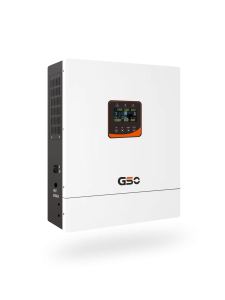
The linked GST range lists 6.6 kW, 8.5 kW, 10.5 kW, and 12.5 kW models with 120 V and 120/240 V split-phase output. Its battery side is based on a nominal 48 V platform and includes settings for lithium, lead-acid, and user-defined batteries. The product page says as many as nine GST inverters can operate in parallel, including configurations for three-phase AC output.
That makes the distinction precise: one GST unit is not a standalone three phase hybrid inverter. A three-phase application requires a supported multi-unit design, with an installer confirming phase arrangement, battery compatibility, and electrical approvals. The series also lists RS485, CAN, USB, and dry-contact interfaces, with Wi-Fi or 4G available through an external module. These connections matter when monitoring and battery communication are part of the project.
The Rest of the System Still Matters
Neither panels nor batteries are included simply because an inverter is called hybrid. Solar string voltage and current must fit the chosen model’s PV input limits, and the battery must meet its charging and communication requirements. The GST carries an IP20 rating and uses forced-air cooling, so it needs a suitable protected location with airflow.
For backup, the list of protected loads and the method of safely isolating them from the grid are as important as the inverter’s rated output. A buyer who expects refrigeration and internet service has a different requirement from one planning to run large motors. Describing that requirement clearly is the bridge between a list of product benefits and a system that performs as intended.
Conclusion
The word hybrid answers what sources an inverter can coordinate; it does not answer which AC service it fits. Output type, operating modes, battery support, and backup design all shape the result. A three phase hybrid inverter search should therefore begin with the required phase arrangement, then move to the energy flows the site wants to manage.
At GSOpower, with our GST Series, the choice centers on whether a split-phase unit or an approved parallel arrangement suits the building. Once that configuration is established, its charging options and storage integration can be judged against real use rather than a broad product label.