
A solar-plus-storage project’s inverter selection may appear simple at first glance: just determine the size of the solar array and go with an inverter that has a comparable rating. Shortcuts like that can lead to inaccurate outcomes.
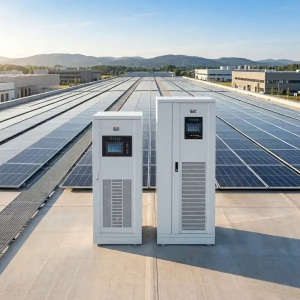
The inverter’s job is to charge the battery, take the anticipated PV input, and work well with the utility supply—all while handling the site’s real demands. Those correlations are used for sizing instead of just panel capacity.
The Number You Should Calculate First
Start with the AC demand that the inverter may need to supply simultaneously. List the major loads and identify which ones can operate at the same time. A home might combine air conditioning, refrigeration, pumps, and general circuits, while a commercial site could add HVAC equipment, machinery, or other high-demand loads.
The relevant figure is maximum simultaneous power, not simply the property’s daily energy consumption. A system consuming 30 kWh per day might have a very different inverter requirement from another site with the same daily consumption but much higher short-duration demand.
A hybrid inverter should therefore have sufficient continuous output for the intended operating scenario. Backup design makes this calculation even more important because the installer must identify which loads remain energized during a grid outage.
Why PV Capacity Does Not Give You the Answer
Solar array capacity tells us how much DC generation is planned, but it does not automatically determine the inverter’s AC rating. The inverter’s PV input limits must be checked independently.
Three specifications deserve particular attention: maximum PV array power, MPPT voltage range, and maximum PV input current. String design must also keep operating and open-circuit voltage within the inverter’s permitted limits.
The published GST three-phase model, for example, specifies dual MPPT inputs and up to 18 kW of PV input on the GST48-12K5-P3. Its two MPPT channels can independently track different PV strings.
That distinction matters when selecting a hybrid inverter. A project can have a PV array whose DC capacity is greater than the inverter’s AC output, but only when the specific model’s DC input limits and system design support that arrangement. We would never infer compatibility from the kW numbers alone.
The Battery Changes the Sizing Equation
Adding storage means the inverter has another job: moving energy between the battery and the AC side. Battery voltage, charging current, discharge capability, and the desired operating power must therefore be compatible with the inverter.
48 V rated battery configurations are available with a 40–60 V voltage range. Separate charging-current specifications are provided for PV, mains, and hybrid charging.
Battery capacity and inverter power should not be confused. A 10 kWh battery describes stored energy, while a 10 kW inverter describes a possible power level. The two figures answer different questions.
Consider the operating objective as well. If the battery is mainly shifting solar energy into the evening, its required discharge profile may differ from a system designed to support demanding backup loads. The inverter needs to accommodate the intended power flow, not merely connect to a battery of sufficient kWh.
Grid Connection Can Rule Out an Otherwise Suitable Model
Electrical configuration can eliminate a model before capacity is even considered. Check whether the site requires single-phase, split-phase, or three-phase operation, then verify the applicable voltage and frequency.
The published GSO range includes single-phase, split-phase, and three-phase configurations. The European GST three-phase series specifies 400 VAC three-phase output, while the US split-phase series is designed around 120/240 VAC configurations.
This is why the phrase hybrid on grid inverter should not be treated as a universal electrical category. Two systems with identical load requirements can still need different inverter models because their grid arrangements differ.
Grid-interactive functions also matter. Grid-connected generation, anti-reverse-current settings, and off-grid output modes are available depending on the configuration.
Peak Loads Reveal Whether the Inverter Is Truly Large Enough
Continuous demand is only part of the sizing equation when equipment with starting surges is involved. Motors, pumps, and compressors can temporarily draw significantly more power than their normal operating levels.
Published GST specifications include both maximum peak power and motor-load capacity. The single-phase range, for instance, lists rated outputs from 3.5 kW to 12.5 kW and corresponding motor-load capacities from 2 HP to 7 HP across the listed models.
We would therefore identify the largest starting loads before selecting the unit. A model that appears adequate after adding normal appliance consumption may not provide the required transient capability.
This check becomes particularly important for backup systems. If several large loads are expected to restart after an outage, the inverter’s peak capability and load-management strategy need to be considered together.
When One Unit Is No Longer the Right Answer
A larger system does not necessarily require an oversized single inverter. Parallel operation can provide another route when the required power exceeds one unit’s practical capacity.
Up to nine compatible units can operate in parallel. For the three-phase series, this scales up to 112.5 kW.
Parallel configuration makes sense when the site’s demand, expansion plan, or system architecture calls for it. It should not, however, be used simply to compensate for an unclear initial calculation. Each unit, PV input, battery arrangement, and protection scheme still needs to be designed as part of the complete system.
A Sizing Decision That Holds Up in Practice
A practical hybrid inverter sizing exercise can be reduced to a sequence of questions:
- What is the highest continuous AC demand?
- Which loads have significant starting requirements?
- How large is the planned PV array?
- Do PV voltage, current, and power remain within the inverter’s input limits?
- Does the battery voltage and charge/discharge capability match the inverter?
- Is the site single-phase, split-phase, or three-phase?
- Will one inverter provide sufficient power, or is parallel operation justified?
At GSOpower, our inverter portfolio includes residential single-phase and split-phase products, along with three-phase models for larger applications. Our published range also supports multiple charging modes, battery integration, and parallel configurations depending on the model. As engineers, we design versatile hardware capable of handling demanding surge profiles without dropping output voltage or triggering faults.
The key is to select the inverter from the system’s operating requirements outward. Do not choose a model simply because its kW rating resembles the PV array size. The correct unit is the one whose AC output, PV input, battery interface, grid configuration, and peak-load capability all work together under the conditions the system is actually expected to face.