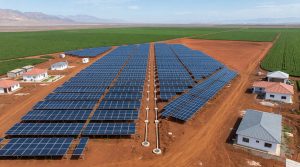

An on-grid solar system does not have to choose between using solar power immediately and storing it for later. A hybrid architecture connects the PV array, battery, loads, and utility grid through coordinated power management.
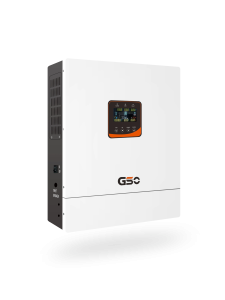
That is what makes an on grid hybrid solar inverter different from a conventional PV inverter: it does more than convert solar electricity for immediate AC use. It also manages stored energy and grid interaction.
Why “On-Grid Hybrid” Describes More Than Grid Connection
A conventional grid-connected inverter primarily converts DC electricity from solar panels into AC electricity for household or commercial loads and grid interaction. A hybrid model adds battery management to that relationship.
The inverter therefore becomes an energy-management point. Depending on system settings and available power, electricity can be directed toward current loads, battery charging, or grid interaction. The exact behavior depends on the inverter model, configuration, and local installation requirements.
At GSOpower, we describe our GST series as an all-in-one solar charge inverter that integrates solar energy storage, utility charging, and AC sine-wave output. Our product range includes single-phase and three-phase configurations to meet different system requirements.
Where the Inverter Sends Solar Power First
Solar production changes throughout the day, while electricity demand follows its own pattern. A hybrid inverter has to respond to both rather than treating PV generation as a constant supply.
Suppose the solar array is producing more electricity than the property currently consumes. The surplus can be directed toward battery charging instead of being immediately lost or exported, depending on the configured operating strategy.
MPPT plays a central role before that energy is managed. Maximum Power Point Tracking adjusts the operating point of the PV input to extract available power from the solar array. MPPT tracking efficiency reaches up to 99.9% on applicable models.
What Changes When a Battery Joins the System
Adding a battery changes the inverter from a simple conversion device into a bidirectional energy-management component. Solar energy can charge the battery, while stored DC energy can later be converted into AC electricity for loads.
Charging does not have to follow only one rule. The GST series provides four selectable charging modes: solar only, mains priority, solar priority, and mains-and-solar hybrid charging. That gives the system flexibility to respond to different energy strategies.
For a homeowner focused on self-consumption, solar-priority operation can direct available PV toward storage before relying more heavily on grid electricity. Other users may choose grid charging under suitable tariff conditions. The appropriate setting depends on the project’s electricity prices, load profile, grid conditions, and operating objectives.
How Grid Power Fits Into the Energy Strategy
Grid connection does not mean the battery becomes irrelevant. Instead, the utility can act as another energy source within the system.
A hybrid inverter can coordinate PV, battery, and grid electricity according to configured priorities. Timed charging and discharging can also be used on applicable GST models, allowing the system to follow scheduled operating periods rather than simply reacting to instantaneous solar production.
That distinction is useful when evaluating a hybrid inverter. We would not ask only whether the unit connects to the grid. We would ask what the inverter can do with that connection: how it charges the battery, how it handles excess PV, how it changes operating modes, and whether those functions match the site’s energy strategy.
What Happens When the Grid Suddenly Disappears
Backup capability is one of the clearest practical differences between hybrid and basic grid-tied systems. A standard grid-tied inverter normally cannot continue supplying a building during a utility outage because of grid-safety requirements.
A suitable hybrid system can instead separate the backup loads from the failed grid and use available battery or PV energy. Typical inverter-to-bypass switching time is 10 ms on listed models. A battery-free emergency function is also available, allowing the system to start from PV input and supply loads under supported conditions.
We would still distinguish product capability from complete backup-system design. Critical-load selection, battery capacity, inverter output, electrical protection, and local installation requirements all affect how an actual backup system operates.
Why MPPT and Control Logic Matter Together
Good solar harvesting and good energy management are related but separate tasks. MPPT determines how effectively the inverter extracts available PV power, while the control system determines where that power should go.
DSP control is used in the GST series, with the manufacturer describing advanced control algorithms designed for fast response. Remote monitoring is also available through App and host-computer interfaces, with Wi-Fi and 4G modules supported on applicable configurations.
Scalability can matter as well. Listed GST models support parallel operation, with the manufacturer specifying up to nine units for applicable series. Three-phase versions can also manage three-phase loads and provide multiple MPPT inputs on specified models.
Where This Architecture Fits Besti
An on grid hybrid solar inverter makes the most sense when solar generation, energy storage, and utility electricity need to work together rather than operate as separate systems. Residential installations can use the architecture for solar self-consumption and backup, while suitable commercial systems can use storage for scheduled energy management and other configured strategies.
The choice should begin with the site’s electrical architecture. We would examine PV capacity, load characteristics, battery requirements, phase configuration, grid conditions, and desired backup behavior before selecting a model.
GSOpower‘s current inverter portfolio includes single-phase, split-phase, and three-phase hybrid configurations, allowing the system architecture to be matched to different project types.
Understanding the distinction between a conventional PV inverter and a hybrid model makes the purchase decision much clearer. The value of a hybrid inverter lies not simply in converting solar electricity, but in coordinating generation, storage, loads, and the grid as one operating system.
For projects requiring that level of control, an on grid hybrid solar inverter provides the architecture needed to make those energy flows work together. A correctly selected hybrid inverter should therefore be evaluated according to the complete system it will manage, not just its nominal output rating.