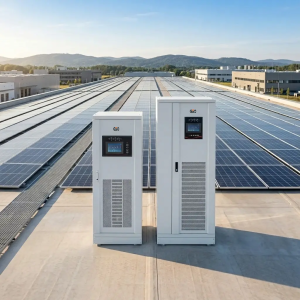

Choosing backup power for a home or small business starts with a practical question: when will the electricity be needed? A solar system battery bank stores energy from solar panels for use after sunset, during expensive tariff periods, or during a grid outage when the system is configured for backup. Grid-connected solar without storage, fuel generators, portable power stations, and older battery technologies each solve a different problem. Understanding those differences makes it easier to choose a solar battery storage system that fits the site rather than paying for capacity or features that will rarely be used.
What a Battery Bank Adds to Solar
Solar panels generate DC electricity when sunlight is available. A compatible inverter converts that power for AC loads, while a battery bank holds some of the energy for later. In a complete solar battery storage system, the battery, inverter, controls, and protection equipment must work together. Capacity, measured in kWh, determines how much energy can be stored; power, measured in kW, determines how many loads can run at once. A large battery cannot start every appliance if its inverter output is too low, and a powerful inverter cannot extend backup time when the battery is small.
A solar system battery bank is most useful where evening consumption is high, grid power is unreliable, or electricity prices vary by time of day. Backup operation also requires an inverter and transfer arrangement designed to isolate the premises safely from the grid. Solar panels and a battery alone do not guarantee power during an outage.
Grid Connected Solar Without Storage
The simplest alternative is a grid-connected solar array with no battery. It can reduce daytime electricity purchases, and some utilities compensate customers for exported energy. Its limitation is timing: energy generated at noon cannot be saved for the evening on site. In most conventional grid-tied installations, the inverter also shuts down during a grid outage for safety.
Adding a solar battery storage system changes the use of surplus generation. Instead of exporting every unused unit of electricity, an owner can reserve some for later consumption. Whether that improves the financial return depends on local tariffs, export rules, equipment costs, and how often stored power is actually used. An installer should model those factors before recommending a battery size.
Fuel Generators for Extended Outages
A generator creates electricity from fuel rather than storing solar energy. It can be a sensible choice for occasional, prolonged outages or large loads that would require an impractically large battery. Runtime depends on fuel availability, and the owner must account for refueling, servicing, noise, and safe exhaust placement. A generator does not make use of excess daytime solar production on its own.
A solar system battery bank serves a different pattern of use. It can charge from solar during the day and supply selected loads later without fuel deliveries or on-site combustion while operating. Its stored energy is finite, however, particularly through several cloudy days. For remote properties or critical loads, a properly designed hybrid arrangement may pair batteries with a generator. The right comparison is therefore the required load and outage duration, not a claim that one technology always replaces the other.
Portable Power Stations and Lead Acid Banks
Portable power stations are convenient for travel, temporary work, and a small number of plug-in devices. They usually require less installation work than a fixed home system. However, buyers should check their AC output, solar input, usable capacity, and whether they can connect safely to essential building circuits. A portable unit may be suitable for lights, phones, or a router without being a substitute for a whole-home solar battery storage system.
Lead-acid batteries remain another option for some low-budget or occasional-use projects. Their purchase price can be lower, but usable capacity, weight, charging requirements, and replacement intervals deserve close attention. Lithium iron phosphate, or LiFePO4, is commonly selected for regularly cycled solar storage because it supports compact, modular designs. The comparison should use the actual product specifications and expected lifetime energy delivered, not the upfront battery price alone.
Matching the System to the Application
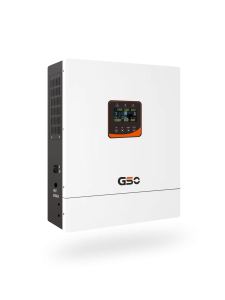
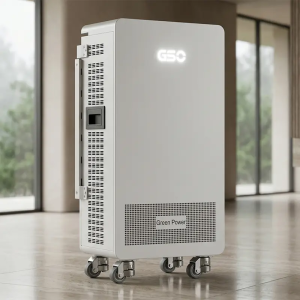
At GSOpower, our home energy storage range includes wall-mounted, wheeled, stacked, rack-mounted, and integrated inverter-and-battery formats. It gives customers several installation options: a wall-mounted unit can conserve floor space in a residence, while a wheeled battery may help where equipment must be moved within a suitable installation area. Stacked or rack-mounted units can make planned expansion easier, while an integrated format can simplify equipment selection for a new installation. These choices are not merely cosmetic: available space, service access, wiring routes, and future capacity all affect the design.
We offer LiFePO4 options for residential solar storage and backup, including modular products that can expand within their supported series. Some products also provide inverter communication features, but compatibility and expansion limits should be confirmed for the exact models selected. For an off-grid cabin, the priority may be autonomy through low-sun periods. For a grid-connected home, it may be evening self-consumption and essential-load backup. A small business may instead focus on shifting consumption away from peak tariff hours.
Start by listing the loads that must run, their starting and continuous power, and the hours of backup required. Then compare usable battery capacity, inverter output, solar charging potential, installation location, and local grid rules. This gives the solar battery storage system a defined job and prevents oversizing based on a vague promise of energy independence.
Conclusion
There is no universal winner between a solar system battery bank and its alternatives. Grid-only solar suits sites that mainly want daytime savings; generators can support long outages when fuel is available; portable units cover small temporary needs. A fixed battery bank is strongest when stored solar energy will be used regularly and backup is part of the design. At GSOpower, we help customers match battery format and system configuration to their loads, space, and plans for future growth.