
Homeowners and installers often search for a SolarEdge hybrid inverter when they want one device to coordinate solar generation, battery charging, grid power, and backup loads. You need to match output power, battery voltage, operating mode, local electrical standards, and the way the system will be used. This FAQ explains the main questions buyers ask and introduces one practical product from our hybrid inverter range.
What does a hybrid inverter do
A hybrid inverter manages electricity from several sources. It accepts DC power from photovoltaic panels, converts it into AC power for household or business loads, and can direct surplus energy to a battery. When solar production falls, the inverter can draw from the battery or the utility grid according to its programmed priority. During an outage, a properly installed hybrid inverter isolates essential circuits and supplies them from available solar and stored energy.
Some systems are designed for grid-connected self-consumption, while others emphasize off-grid operation or backup. Before comparing a SolarEdge hybrid inverter with another model, define whether your priority is lower evening bills, whole-home backup, an off-grid cabin, or a combination of these goals.
Do I need a battery for a hybrid inverter
No. A hybrid inverter can operate with a battery, but the exact functions available without one depend on the model and installation. Our GSOpower’s GST series, for example, supports a battery-free emergency start, allowing PV input to power selected loads when the battery is depleted or not connected. A battery remains valuable when you need power after sunset, want to shift energy away from peak tariffs, or need steadier backup during a grid interruption.
Battery sizing should reflect the loads you want to protect and their expected runtime. A refrigerator, lights, router, and circulation pump require a different capacity from an electric range, heat pump, or workshop motor. Your installer should also check starting current, usable battery capacity, and the inverter’s continuous and peak output.
How does the GST series compare as an alternative
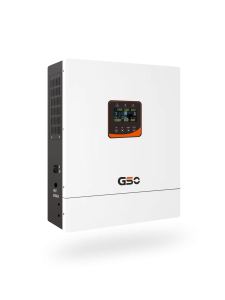
GSOpower’s GST Series Single-Phase EU Hybrid Solar Inverter is designed for homes, retail shops, and small commercial sites that need flexible solar and backup control. It is available from 3.5kW to 12.5kW, uses a 48V battery range, and provides pure sine wave AC output at 230V with support for common 50Hz or 60Hz applications. The series can connect up to nine units in parallel, so customers can expand a single-phase installation or coordinate larger loads as their requirements change.
We built this hybrid inverter around four programmable charging priorities: Solar Only, Mains Priority, Solar Priority, and Mains and Solar Hybrid Charging. Timed charging and discharging can help users move energy into lower-cost periods and reserve capacity for critical loads. On 8K5 to 12K5 models, dual MPPT trackers reach 99.9% tracking efficiency, helping the array respond to changing sunlight. A typical inverter and bypass switching time of 10ms supports a smooth transition for connected equipment.
The GST series also gives installers and end users practical communication choices. Standard RS485, CAN, USB, and dry-contact interfaces support system integration, while optional WiFi or 4G modules enable app and host-computer monitoring. Users can view operating data, check system status, and adjust permitted parameters remotely. The units are rated for operation from -10°C to 55°C and carry CE, IEC62109-1, and EN61000 related certifications for the applicable models.
Can a hybrid inverter provide backup during an outage
Yes, when the system includes the correct backup wiring, protection devices, and battery or PV source. A hybrid inverter detects the grid failure, separates the backup loads from the utility, and continues supplying electricity. The GST series lists a typical 10ms inverter and bypass switching time, but the actual result depends on the complete installation and the loads connected.
A backup plan should identify essential circuits before installation. Keeping lights, communications, refrigeration, and selected pumps online may be more cost-effective than attempting to run every appliance. If the outage lasts through several low-sun days, the battery may need support from the grid, a generator, or additional PV capacity. No SolarEdge hybrid inverter or alternative can deliver unlimited energy without a source and sufficient storage.
Which hybrid inverter size should I choose
Start with a load schedule rather than the panel count alone. Add the running wattage of the devices that may operate simultaneously, then check the highest starting surge from motors and compressors. Select an inverter whose continuous output covers the planned load and whose surge rating can start the largest motor. The battery voltage, maximum charging current, and PV input limits must also match the selected equipment.
For a small home, a 3.5kW or 6.6kW GST model may cover essential circuits. Larger homes, shops, or sites with pumps can consider the 8.5kW, 10.5kW, or 12.5kW versions. If demand is likely to grow, parallel capacity can reduce the need to replace the original inverter. An installer should verify local grid requirements and the exact model datasheet before finalizing the design.
How should I compare monitoring and installation support
Look for more than a mobile app screenshot. Confirm which values can be viewed, which settings can be changed remotely, how fault notifications are delivered, and whether the communication protocol matches your battery and energy management equipment. Also review enclosure rating, ventilation, noise, cable access, and service clearance. Indoor IP20 equipment needs a protected installation area, while outdoor projects may require a different enclosure and system design.
Conclusion
A SolarEdge hybrid inverter may suit a project built around a particular ecosystem, while another hybrid inverter may offer a better combination of power range, battery flexibility, parallel expansion, or local support. The best decision follows the load profile, backup objective, electrical standard, and future expansion plan. At GSOpower, we help customers select and configure equipment around those practical requirements, with the GST series providing a flexible starting point for European single-phase solar and storage projects.