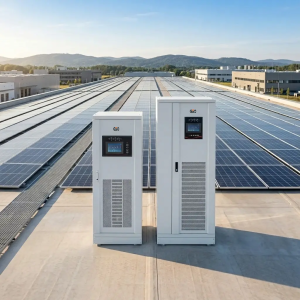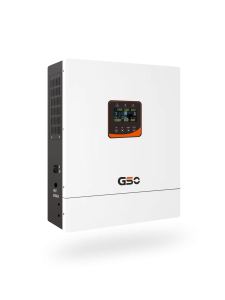

Businesses use commercial battery storage to keep essential equipment running, make better use of solar power, and manage when they draw electricity from the grid. One modular option for commercial scale battery storage is our GSOpower’s GBP-R Series, a rack-mounted lithium iron phosphate battery designed for applications where space, reliability, and room to expand matter.
What Commercial Scale Battery Storage Does
A commercial battery storage system stores electricity for use at a later time. With the right inverter and controls, a business can charge its batteries when solar generation is available or electricity demand is lower, then discharge them when the energy is needed. The same system may also support selected loads during an outage, depending on how it is designed and connected.
The word “scale” describes the needs of the site, not one fixed battery size. A shop protecting its payment systems and a data center supporting critical equipment have different power demands and backup requirements. Effective commercial scale battery storage starts with those requirements: which loads must run, how much power they draw, and how long they need to operate.
Who Is It For
Commercial battery storage can suit offices, retail sites, warehouses, commercial buildings, and other facilities that want to make better use of their on-site solar generation. During periods when solar panels produce more electricity than the building is using, the excess energy can be stored in a battery instead of being exported to the grid. That stored electricity can then be used later, such as in the evening, during periods of higher demand, or when solar output drops. This can help businesses increase solar self-consumption and reduce their reliance on electricity purchased from the grid.
Battery storage can also be useful for businesses assessing peak demand management. Some commercial electricity tariffs include demand charges based on the highest level of power drawn from the grid during a certain period. In these situations, a battery can discharge when electricity demand rises sharply, helping to reduce the facility’s peak grid consumption. This approach, often referred to as peak shaving, may help lower electricity costs. However, the financial benefit depends heavily on the business’s tariff structure, operating hours, load profile, battery size, and charging strategy. For this reason, businesses should review their electricity bills and energy-use patterns before deciding whether battery storage is suitable for demand management.
Power continuity is another important reason to consider commercial battery storage. Telecom sites, data centers, industrial facilities, healthcare buildings, and other operations may rely on critical equipment that needs to remain available even when grid power is interrupted. A battery system can provide temporary backup power, helping essential systems continue operating during short outages or while another backup source starts.
For backup applications, system design needs to consider both power and energy requirements. Power capacity determines how much electrical load the battery can support at any one time, while energy capacity determines how long the battery can support that load. A facility with equipment that draws a large amount of power for a short period will have different storage requirements from a site that needs to support a smaller load for several hours.
Businesses should therefore identify which equipment is critical, how much power it requires, and how long backup is expected to last. By matching battery capacity and output to the actual operating needs of the facility, commercial storage can support solar utilisation, demand management, and power continuity more effectively.
A Closer Look at the GBP-R Series
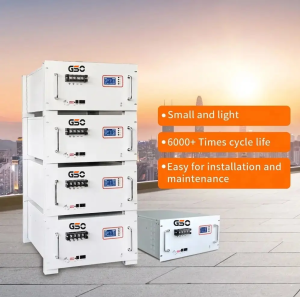
Our GBP-R Series uses a rack-mounted format that lets installers place multiple battery modules in an enclosure without taking up a large floor area. Individual models on the product page range from 2.56 kWh to 16.1 kWh of nominal energy. Up to 16 units can be connected in parallel, giving project teams a way to build capacity around the site’s needs.
The series also addresses practical installation and maintenance concerns. Its built-in LCD displays battery status and allows an installer to select an inverter communication protocol on screen. Front-access wiring helps technicians reach connections while the unit remains in the rack, while automatic addressing simplifies adding modules in parallel. The product specifications list a cycle life of more than 5,000 cycles at 80% depth of discharge.
These features make the GBP-R a potential building block for commercial scale battery storage, particularly in rack-based solar and backup installations. A complete system still needs a compatible inverter, suitable controls, and a design matched to the facility. For larger projects, our product guidance recommends considering a high-voltage cluster series once capacity needs reach 50 kWh or more.
Conclusion
Start with the job the battery must do. For backup, identify critical loads and the required runtime. For solar use or peak management, examine when the site generates electricity, when it consumes it, and how its utility bills are calculated. Then check the available installation space, inverter compatibility, and plans for future expansion.
That assessment turns commercial battery storage from a broad idea into a system specification. It also helps determine whether a modular rack battery is the right fit or whether the site calls for a different configuration.
At GSOpower, we offer the GBP-R Series for businesses and project teams that need a compact, expandable battery option. The right commercial scale battery storage design begins with the facility’s actual loads and operating goals, then selects the battery capacity and supporting equipment to meet them.