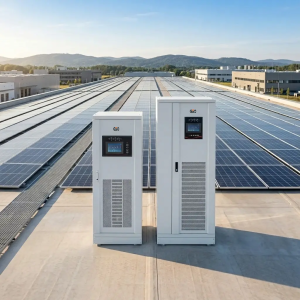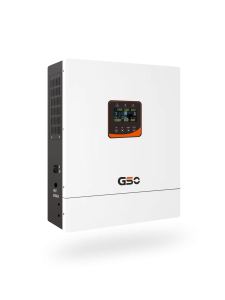

A whole house solar battery stores electricity so a home can use some of its solar energy after the sun goes down or during a grid outage. At GSOpower, our GBP-L Series is a wheeled lithium iron phosphate battery built for this role. It offers substantial storage capacity, but it is only one part of a working solar backup system. Beginners should understand how the panels, inverter, battery, and home circuits fit together before choosing a battery size.
Follow the Energy From Roof to Home
Solar panels produce DC electricity when sunlight reaches them. A compatible hybrid inverter manages how that electricity is used, converts power for AC household circuits, and coordinates charging with the battery. When solar production exceeds the home’s immediate needs, the system can store some of the excess for later use, depending on its settings and available battery capacity.
In the evening, the inverter can draw stored energy from the battery to supply connected loads. Grid power may provide another charging source if the inverter and system settings allow it. During an outage, the home needs equipment that safely separates its backup circuits from the grid. A battery alone cannot perform that job, and solar panels alone do not guarantee power when the grid is down.
Understand What Whole House Coverage Requires
The phrase whole house battery backup sounds simple, but households use electricity in very different ways. Lighting, refrigeration, internet equipment, and a few outlets may require modest power. Running air conditioning, electric cooking, water heating, and an EV charger together places a much larger demand on the system. Decide which appliances must work during an outage and which can wait.
Two measurements guide that decision. Battery energy is measured in kilowatt-hours, or kWh, and helps determine runtime. Inverter power is measured in kilowatts, or kW, and determines how much equipment can run at once. If important loads average 2 kW for eight hours, they require about 16 kWh of delivered energy. The selected battery needs additional margin for conversion losses and its usable operating range. The inverter must also handle brief startup demands from motors and compressors.
Solar changes the calculation, but it does not eliminate it. A sunny afternoon may recharge the battery while the house is using power; a cloudy winter day may provide much less. For reliable whole house battery backup, estimate nighttime and poor-weather needs as well as average daily solar production.
Meet the GBP-L Series
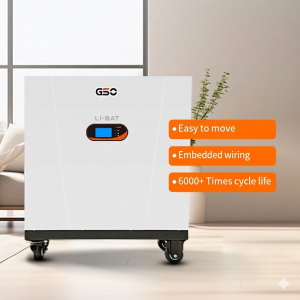
Our GBP-L Series is offered in capacities of approximately 13.44 kWh to 32 kWh per unit, according to the product page. Multiple batteries can be considered for parallel expansion when the system design supports it. The units use lithium iron phosphate cells and are specified for more than 5,000 cycles at 80% depth of discharge. An LCD displays battery information and lets an installer select an inverter communication protocol on screen.
The built-in wheels help position the battery cabinet without requiring wall mounting. That is useful for a large unit, although the product specifications list weights of more than 100 kg, so it should not be treated like a portable power station. The GBP-L is a battery, not a combined inverter and battery. To deliver AC electricity to household circuits, it must be paired with compatible equipment and installed as part of a complete system.
Plan for Solar Charging and Backup
Ask an installer how the proposed hybrid inverter will use solar energy in normal operation. Some homeowners mainly want to store midday surplus for evening use. Others want to keep selected circuits powered through an outage. Those goals may call for different operating settings, wiring, and amounts of reserved battery energy.
Also ask what happens if the grid fails while the battery is partly discharged. Can the solar array continue charging it in the proposed backup configuration? Which circuits will receive power, and what happens when several large appliances start at once? These answers depend on the inverter and installation, not simply on the battery’s nameplate capacity. A clear operating plan is more valuable than an optimistic runtime estimate.
Choose a Suitable Location
The GBP-L has an IP20 protection rating and uses natural air cooling. Plan a protected location that meets the product’s environmental requirements and leaves access for wiring, ventilation, and service. Have a qualified installer check the floor and electrical layout before the cabinet is placed. The wheels can help with positioning, but connected battery equipment should not be moved casually.
Check compatibility before ordering. The inverter must support the battery’s voltage and communication requirements, and the proposed system must meet local electrical rules. If expansion is likely, discuss space and equipment limits now so later modules can be added within a planned design. Good installation decisions protect both day-to-day performance and backup reliability.
Conclusion
A whole house battery backup project starts with the home’s actual electricity use. Identify essential circuits, estimate how long they need power, and compare that energy demand with battery capacity and inverter output. Then consider solar production, poor-weather conditions, installation space, and future growth. This turns a broad promise of whole house coverage into a realistic plan.
Our GSOpower‘s GBP-L Series for homeowners who want a substantial, expandable battery at the center of that plan. With a compatible hybrid inverter and carefully selected circuits, it can help store daytime solar energy and support household needs when grid power is unavailable.