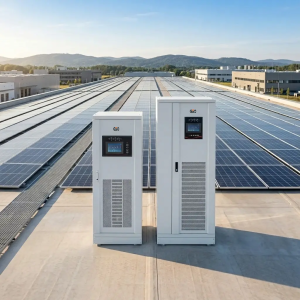

Solar panels produce their strongest output in the middle of the day, while households often use the most electricity after sunset. A whole house battery for solar closes that timing gap by storing surplus generation for later use. It can also provide backup during a grid interruption, depending on the battery, inverter, wiring, and selected loads.
Why solar generation needs storage
Without a battery, extra midday solar power is exported or curtailed when household demand is low. Export credits may not equal the retail price for evening electricity. Storage keeps more rooftop energy available for later. This is the central purpose of a whole house battery backup: move energy to the hours when it has greater value.
Storage also helps a home manage variable weather. Several days of poor sunlight may require a larger reserve, grid charging, or another backup source. Evaluate a whole house battery for solar against local weather, tariff rules, and the family’s routine.
How the energy moves through the system
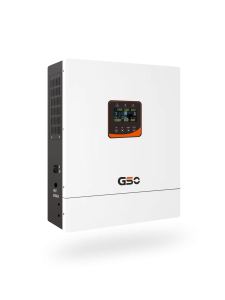
During daylight, PV panels send DC electricity to a hybrid inverter. The inverter supplies household loads first when selected, then directs surplus power into the battery. After sunset, it converts stored DC energy to AC for home circuits. When the battery reaches its reserve, the system can return to grid power.
When the utility fails, the inverter isolates the home before creating a local supply. It feeds backup circuits from the battery and, when available, the solar array. Transfer speed, surge capability, and selected circuits determine whether appliances continue without interruption. A whole house battery backup is a complete electrical arrangement, not a battery beside the panel.
What makes it whole house
Whole house describes intended coverage, not unlimited output. A system may support the main distribution board while using load controls to prevent high-demand appliances from starting together. Refrigerators, lighting, security equipment, routers, medical devices, and selected pumps are common priorities. Ovens, resistance heaters, air conditioning, and EV chargers may need larger equipment or exclusion.
Separate energy capacity from power capacity. Kilowatt-hours indicate duration; kilowatts indicate simultaneous output. A household may have ten hours of stored energy yet trip the inverter when a motor starts with a high surge. Matching both values keeps a whole house battery backup useful.
Product Spotlight
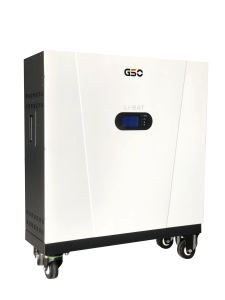
Our GBP-L Series Wheel Type LiFePO4 Battery brings a movable format to whole-home solar storage. It uses 48V or 51.2V platforms and offers nominal capacities from 13.44kWh to 32kWh per unit. The LiFePO4 cells are rated for more than 5,000 cycles at 80% depth of discharge, and the stated design life is ten years.
We give the GBP-L an integrated wheeled cabinet for positioning in a suitable garage or utility area without wall fixings. Its LCD shows battery status and allows selection of supported inverter protocols. Plug-in terminals organize connections, while natural air cooling avoids a dedicated battery fan. Maximum continuous current reaches 150A or 200A depending on the model.
The GBP-L can serve one home or join an approved larger configuration. Connected to a compatible hybrid inverter, it can support household circuits during an outage and shift solar energy into evening use. Its IP20 protection level means the battery belongs in a dry, protected indoor location with the clearances and environmental conditions specified for the installation.
How to choose the battery size
Sizing begins with actual consumption. Review bills or interval data, mark outage loads, estimate their running power and required hours, then add starting requirements for pumps, compressors, and other motors. This establishes the energy reserve and inverter output required.
A smaller home may use a 13.44kWh class unit for overnight essentials. A three or four-bedroom property could require around 16.1kWh, while an EV owner or high-consumption household may consider 28.8kWh or 32kWh. These figures are starting points rather than guarantees. Heating habits, climate, solar production, and backup priorities can change the result.
Why a whole house battery backup matters
The first benefit is resilience: automatic transition can keep food cold, alarms active, and communications available during an outage. Stored solar power can also reduce expensive evening purchases under a time-of-use tariff. A battery may charge from solar, the grid during low-rate periods, or both.
LiFePO4 chemistry adds a long-cycle option for homes that charge and discharge frequently. The value should be judged over the expected service life, including usable capacity, efficiency, warranty, and replacement planning. Quiet operation and the absence of fuel handling can also matter in dense neighborhoods or homes where a generator is impractical.
Installation and daily operation
The battery must connect to a compatible inverter, protection equipment, and an appropriate backup panel or transfer arrangement. Confirm voltage range, communication protocol, cable size, grounding, and local electrical requirements before installation. A wheeled cabinet simplifies placement, but the floor must support its weight and leave room for inspection and service.
After commissioning, monitor state of charge, energy flow, alarms, and temperature. Keep the battery within its recommended range and revisit settings when appliances, solar panels, or an EV are added. A whole house battery for solar works best when its schedule follows household demand.
Conclusion
A whole house battery backup links daytime solar production with evening demand and provides a controlled source of power during grid interruptions. A whole house battery for solar matters because it can increase self-consumption, reduce exposure to peak rates, and keep selected household services running. At GSOpower, we can help customers assess loads, inverter compatibility, capacity, and installation conditions before choosing a practical LiFePO4 storage configuration.