
Volatile utility grids and escalating power costs are prompting both commercial facility directors and residential owners to reconsider their electrical infrastructure. Conventional grid-tied inverters fall short, as they lack the built-in intelligence for energy storage and dynamic bi-directional power flow. The adoption of an advanced on-grid hybrid solar inverter offers a definitive upgrade—consolidating solar generation, grid synchronization, and battery management within a single, intelligent platform.
The Operational Architecture of Dual Directional Energy Routing
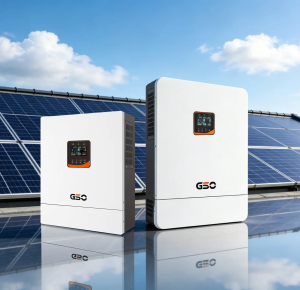
Centralized conversion networks perform the vital technical task of transforming direct current from solar modules into usable alternating current. Traditional setups required separate, isolated backup chargers to manage battery storage pathways during daylight hours. A consolidated system eliminates this physical duplication by housing both functionalities within a single, highly responsive enclosure.
The internal processor continuously monitors incoming utility frequencies while tracking real-time generation trends from your rooftop. This dual-sided tracking capability guarantees that power moves smoothly to meet active household loads without conversion lags. Maintaining this automated equilibrium forms the core operational foundation of a modern, localized microgrid.
Exploring the Core Power Dynamics of Multi Phase Distribution
Large-scale commercial operations and high-consumption residential estates rely on multi-phase electrical frameworks to balance massive incoming current loads. Single-phase systems often experience severe phase imbalances and voltage fluctuations when heavy motorized machinery starts up. Implementing a specialized three phase hybrid inverter ensures that electrical energy is distributed equally across all active supply lines.
This balanced transmission method prevents high-voltage stress on delicate equipment while satisfying strict regional utility grid compliance guidelines. Maintaining three balanced current streams also allows facilities to export surplus generation back to the main grid safely. It represents the standard electrical foundation for properties that demand heavy-duty, uninterrupted energy distribution.
Maximizing Solar Harvesting via Dual Maximum Power Point Tracking
Rooftop architectures often feature complex geometries, meaning different solar panel arrays must face varied directions or experience temporary shading during the day. Standard single-input conversion units can suffer massive generation drops if even one panel on a string becomes partially shaded. Integrating independent, high-capacity tracking inputs resolves this spatial bottleneck by optimizing each panel group separately.
Our high-performance model GST48-12K5-P3 features dual MPPT inputs that handle up to 9,000W each, delivering up to 18kW of solar input in total. Each input tracks independently, maximizing yield from arrays facing different orientations or with partial shading on one string. This advanced digital tracking ensures that your system captures the maximum amount of clean energy possible in any weather.
Understanding Grid Interaction and Export Limitation
Modern conversion units offer versatile software logic to alter how power is prioritized throughout the day as utility rules change. This programming flexibility allows users to maximize direct self-consumption by utilizing stored battery reserves during peak pricing hours. Lowering your reliance on public distribution assets flattens your consumption curve from the perspective of the utility provider.
When internal storage reserves are fully charged, surplus solar generation can feed back into the local communal infrastructure. This multi-layered balancing act ensures that your clean tech array stays highly productive through every operational hour. Managing these public and private distribution roles requires high-precision internal circuitry and strict compliance with local grid codes.
Streamlining Corporate Logistics via Pre Wired Configurations
Traditional heavy-duty retrofitting projects require installation teams to source, mount, and wire numerous loose sub-components across multiple days. This lengthy field assembly window increases initial labor costs and introduces potential configuration errors between different component brands. Utilizing fully pre-wired, factory-tested systems minimizes onsite physical complications and speeds up the transition to green technology.
At GSOpower, we focus our engineering expertise on delivering unified, installer-friendly solutions that minimize deployment friction across global commercial markets. Our integrated setups remove the need for external distribution enclosures, shortening system commissioning times down to just a few hours. Simplifying the physical installation phase protects your facility from unnecessary operational downtime during the hardware integration phase.
Prioritizing Thermal Safety in Enclosed Spaces
Operating high-voltage conversion equipment near active spaces demands strict compliance with rigorous safety criteria. Advanced thermal management utilizes large aluminum heat sinks paired with silent cooling loops to prevent internal component fatigue. Multi-layered safety warnings continuously track voltage benchmarks and grounding safety to maintain complete structural protection.
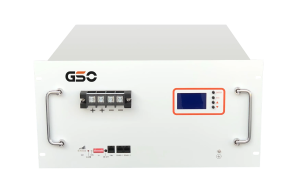
Digital monitoring tools show active performance data directly on the main integrated screen, simplifying routine system checks. Any minor variance from normal operational behavior triggers an instant, automated isolation process to safeguard your property network. This continuous oversight preserves internal component health, ensuring your hardware maintains a predictable, multi-decade lifecycle.
Strategic Procurement and Protocol Integration Flexibility
Selecting the right equipment provider involves looking beyond basic datasheets to evaluate manufacturing capability and technical support channels. Standard off-the-shelf conversion components often lack the pre-loaded protocol libraries required to interface smoothly with diverse third-party lithium battery brands. Our team provides full-spectrum technical consulting alongside flexible OEM/ODM services to satisfy distinct regional infrastructure rules.
The GSOpower product ecosystem combines advanced conversion hardware with intuitive control systems designed for diverse international microgrids. We focus on building versatile units that minimize physical field deployment complexity while shortening project commissioning times. Investing in purpose-built engineering guarantees that your property retains a highly dependable power buffer through any utility challenge.
Conclusion
Choosing a modern three phase hybrid inverter system is one of the best ways to keep heavy electrical demands balanced while dodging rising utility rates. Adding a thoroughly tested on-grid hybrid solar inverter to your property creates an effortless energy loop, connecting your solar panels, storage system, and local power grid. It’s a strategic infrastructure move that pays off immediately with lower energy bills and a rock-solid, independent power setup.
At GSOpower, we focus our technical expertise on manufacturing the ruggedized, highly precise hardware needed to stabilize modern microgrids. Our team remains dedicated to supplying flexible, full-protocol solutions that satisfy strict electrical grid regulations across diverse international markets.