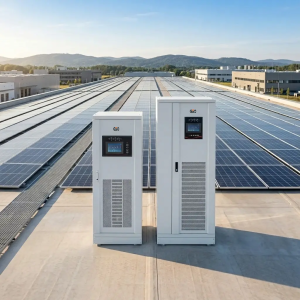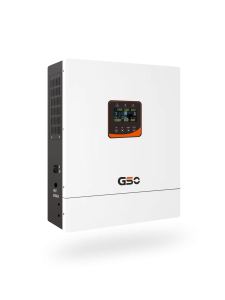

An all in one solar power system combines several parts of a solar storage setup in one unit. Our GSOpower’s GSL Series brings together a hybrid inverter, lithium iron phosphate battery modules, an MPPT solar charge controller, and a battery management system. It is designed for homes and small commercial sites that want solar generation and stored energy in a compact, expandable setup.
What the System Includes
In a conventional solar and battery setup, the inverter, battery modules, charge controller, and related control equipment may be selected as separate components and then installed and configured individually. An all in one solar power system combines several of these core functions within one integrated solution. This can reduce the number of separate devices that need to be mounted, wired, and coordinated on site, helping simplify system design and installation.
However, “all in one” does not mean that every part of a complete solar installation is physically built into a single unit. Solar panels are still separate components and must be supplied, positioned, and connected to the system. Depending on the project, additional equipment such as protection devices, distribution panels, cabling, mounting hardware, and metering components may also be required.
Our GSL Series integrates the main equipment needed for energy storage and power conversion. Its battery modules store electrical energy for later use, while the hybrid inverter converts the batteries’ DC output into AC electricity that can be used by connected household or commercial loads. This allows stored energy to support normal electricity consumption when required.
The system is also designed to operate with more than one charging source. In addition to receiving energy from solar panels, our GSL Series can charge its batteries from the utility grid. This means the system can still function as a battery storage solution even when no solar array is installed. For sites that plan to add solar later, this configuration can also provide additional flexibility.
When solar panels are connected, the built-in MPPT charge controller manages the power coming from the PV array. MPPT, or Maximum Power Point Tracking, continuously adjusts the operating conditions of the solar input so the system can make more effective use of available solar generation under changing sunlight and temperature conditions.
The battery management system, or BMS, provides another important layer of control. It monitors the condition and operation of the battery modules, including parameters such as voltage, current, temperature, and state of charge. By coordinating battery operation and helping keep the modules within their specified operating limits, the BMS supports stable day-to-day performance.
Together, these integrated components allow our GSL Series to manage solar input, grid charging, battery storage, and AC power delivery within one coordinated system. The main benefit is not that every part of a solar installation disappears into a single enclosure, but that several of the most important power conversion, charging, storage, and monitoring functions are designed to work together as one system.
How to Choose the Right Size
Start with two different measurements: power, measured in kilowatts, and energy, measured in kilowatt-hours. Power determines how many appliances the inverter can run at once. Energy helps determine how long the batteries can run them. For example, essential loads drawing 1 kW for eight hours require about 8 kWh of delivered energy; a system design also needs room for conversion losses and usable battery capacity.
Our GSL Series offers 5.5 kW and 10 kW inverter options. The listed 5.5 kW configurations have 10 kWh, 20 kWh, or 30 kWh of battery capacity, while the listed 10 kW configurations have 10 kWh or 20 kWh. Choosing between them means checking both the combined power of the loads and the desired backup time. A larger battery will not compensate for an inverter that cannot supply the required power.
Plan for Installation and Future Needs
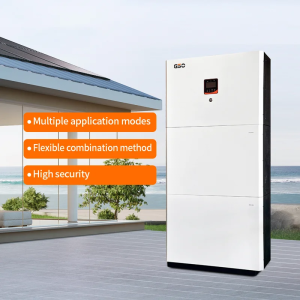
The GSL’s battery modules stack beneath the inverter unit, allowing capacity to grow without giving each module a separate place on the wall or floor. Its specifications also list multiple output and charging modes, along with app-based monitoring. These features are useful when a household or business expects its energy use to change.
Before installation, check where the unit will sit, which circuits it will supply, and how the solar array will connect. The GSL is rated IP20, so it needs a suitable protected location. An installer should also confirm the site’s electrical requirements and configure the operating modes for its solar, grid, and backup priorities.
Conclusion
The right all in one solar power system depends on what you want it to do. List the loads that must stay on during an outage, estimate how long they need power, and compare that need with both inverter output and battery capacity. If your goal is to use more solar energy after sunset, review your daytime generation and evening consumption as well.
At GSOpower, we offer the stackable GSL Series for customers who want integrated solar storage with a choice of inverter outputs and battery capacities. Starting with a clear picture of your loads makes it easier to select a configuration that fits today and leaves room for future needs.