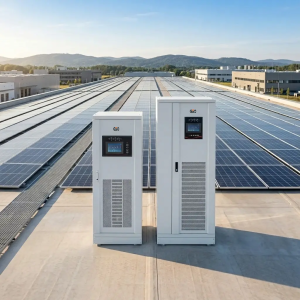

Choosing a hybrid solar power inverter means deciding how your home will make, store, and use electricity. This equipment links solar panels, household loads, batteries, and the grid, so its settings affect savings and outage performance. Consider output phase, battery voltage, PV input, charging logic, monitoring, and future loads.
What a solar hybrid inverter does
A solar hybrid inverter coordinates photovoltaic panels, batteries, household loads, and the grid. It converts DC to AC, stores surplus generation, and draws from the utility when solar or stored energy is insufficient. Operating modes determine which source receives priority.
Unlike a basic string inverter, a solar hybrid inverter can manage battery charging and backup without separate control equipment. An integrated unit simplifies source selection, battery protection, and load supply.
Which specifications deserve attention
Start with AC output. Single-phase equipment suits many homes, while split-phase models serve markets requiring 120V and 240V circuits. Check continuous power, peak surge, waveform, and motor-starting capability because pumps and heat pumps can demand high bursts.
Review maximum PV array power, open-circuit voltage, input current, and MPPT voltage window. Multiple trackers can handle different roof orientations, but the array must remain within the inverter’s electrical limits.
Battery compatibility covers chemistry, operating voltage, charge and discharge current, communication protocol, and protection functions. A 48V battery may not suit every model. Check the complete battery and inverter datasheets before specifying a system.
Understanding charging modes
Charging logic determines daily behavior. Solar Only avoids grid charging; Solar Priority uses the grid only when PV is inadequate; Grid Priority charges from inexpensive overnight power; Hybrid charging combines both sources when rapid replenishment is needed.
These modes suit different goals. Store midday generation when feed-in compensation is low, charge overnight under time-of-use pricing, or reserve solar energy for essential off-grid loads. A solar hybrid inverter delivers more value when settings match the tariff and routine.
Product Spotlight
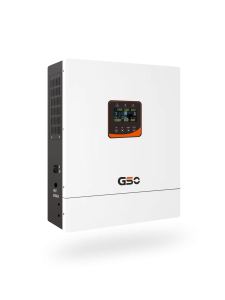
Our GST Series US Standard Split-phase Hybrid Inverter gives homes and small commercial sites a battery-ready solar control option. It comes in 6.6kW, 8.5kW, 10.5kW, and 12.5kW classes, uses a 48V battery platform, and provides pure sine wave output for 120V or 120/240V configurations, subject to the model.
We equip this hybrid solar power inverter with four selectable modes: Solar Only, Grid Priority, Solar Priority, and Hybrid. DSP control tracks the PV array at a listed 99.9% MPPT efficiency. Typical inverter and bypass switching is 10ms, and up to nine units can operate in parallel.
The series can start from PV without a connected or charged battery when sunlight is available. RS485, CAN, USB, and dry-contact interfaces support communication; optional WiFi or 4G modules enable remote monitoring. Units use forced-air cooling, carry IP20 classification, and operate from -10°C to 55°C.
Can it keep the home running during an outage
Yes, provided the installation includes a compatible battery, backup wiring, protection devices, and an approved transfer arrangement. When the grid goes down, the inverter isolates the backup circuits and supplies them from stored energy or available PV input. The inverter’s continuous and peak ratings still limit how many appliances can operate together.
Plan the backup panel around refrigeration, lighting, communications, security, and selected pumps. Heaters, ovens, central air conditioners, and EV chargers may need load management or higher capacity. Outage duration should guide battery planning because no hybrid solar power inverter supplies unlimited energy.
How many panels and batteries are appropriate
Use measured consumption whenever possible. Review utility data, identify daytime and evening demand, and note seasonal changes. Estimate backup energy, compare it with usable capacity, and include conversion losses plus a reserve.
PV size should cover daytime loads and battery replenishment. More panels shorten recovery time; additional batteries extend evening operation. Confirm PV voltage, current, battery charge rate, and expansion plans before installation.
Monitoring and installation details
Remote monitoring should show state of charge, PV production, load demand, grid status, alarms, and energy history. Confirm remote parameter access, on-site fault requirements, and communication settings during commissioning.
Installation quality affects reliability as much as the hardware. Check clearances, ventilation, cable sizing, grounding, surge protection, and local interconnection rules. IP20 equipment needs a protected indoor location. Keep the inverter accessible for service and leave space for any battery modules planned for future expansion.
What to ask before you buy
Request the exact model, output phase, continuous and peak power, PV limits, battery range, warranty, monitoring method, and backup circuits. Ask how it behaves when the battery is full, empty, or disconnected, then compare installed cost with expected savings and avoided outage losses.
Conclusion
A solar hybrid inverter can unify solar conversion, battery charging, grid interaction, and backup control, but its value depends on correct sizing and configuration. The GST Series combines multiple charging priorities, high-efficiency MPPT, parallel expansion, emergency PV operation, and remote communication options for suitable residential and small commercial projects. At GSOpower, we can support our customers for evaluating the hybrid solar power inverter specification against their loads, battery plans, and local electrical conditions before purchase.