
Buying a solar hybrid inverter is less about choosing the largest wattage than matching the equipment to a particular electrical system. Our GST Series is a split-phase lineup for projects requiring 120 V and 240 V AC output. It combines solar conversion, battery charging, and grid interaction, but the result still depends on the panels, storage, wiring, and settings around it. The questions below help turn a product comparison into a workable purchase decision.
Start With the Electrical Service
Look at the building’s supply before comparing model names. A split-phase service provides both 120 V and 240 V circuits; a single-phase installation in another market may have different voltage requirements. The GST models on the linked page are listed for split-phase output. An installer should verify that the proposed inverter matches the site’s service, distribution panel, and applicable connection rules.
This check is especially important when comparing similar-looking products online. Single-phase and split-phase models may both be called hybrid inverters even though their output connections differ. The output table, model number, and installation documentation are better guides than a general claim that an inverter works with solar. If the electrical service does not match, other attractive features cannot make the product suitable.
Size Output for Real Loads
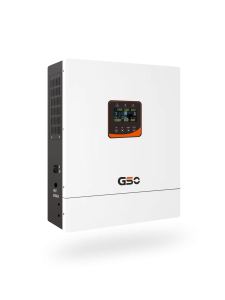
Our GST Series includes rated outputs of 6.6 kW, 8.5 kW, 10.5 kW, and 12.5 kW. Those figures describe continuous AC power, not the amount of energy a battery can hold. To choose among them, record which appliances are likely to operate simultaneously and include equipment that draws extra power while starting. Motors, pumps, and cooling systems deserve particular attention.
For example, a home with several modest loads may still need a higher output rating if it expects a large compressor to start while other devices are running. Conversely, a larger inverter will not extend a battery’s runtime unless the battery capacity also changes. A sensible quote should show the assumed peak load and explain why a particular GST model meets it.
Make the Solar Array Fit the Input
Solar panels are connected in strings, and their voltage and current vary with panel type and conditions. The inverter’s PV input limits therefore matter as much as its AC output. The GST specifications list MPPT solar charging and model-dependent limits for array power, input current, and voltage. An installer can use those values to select a string arrangement that stays within the permitted range.
MPPT control helps the inverter adjust its operating point as sunlight changes. It cannot compensate for an array that is incorrectly sized or badly shaded. If panels already exist, share their exact model and wiring details before ordering. If panels are being purchased with the inverter, design both sides together rather than assuming any array with a similar wattage will be compatible.
Decide How Storage Will Be Used
A solar hybrid inverter can work with battery storage, but the GST itself is not a battery. Its specification table describes a 48 V battery platform and settings for lithium, lead-acid, and user-defined battery types. Check the proposed battery’s voltage range, charging requirements, and communication protocol against the selected GST model. Compatibility must be confirmed at the level of the actual battery and inverter models.
The GST page also describes PV-only startup when no battery is connected. That feature may supply supported loads while sunlight is available, yet it is not a substitute for stored energy after dark or in poor weather. If the aim is backup through a long outage, specify the battery capacity and the amount of charge to reserve for emergencies.
Define Backup Before You Pay for It
Write down the circuits that should stay active when grid power stops. A refrigerator, network equipment, lighting, and heating controls create a different backup requirement from a whole-property plan that includes electric cooking or air conditioning. The electrical design must isolate the supported circuits safely and ensure the inverter can carry their combined demand.
The GST specifications give a typical switching time of 10 ms between inverter and bypass operation. Treat that as a product specification to discuss with the installer, rather than a guarantee for every connected device. Ask what happens when battery charge runs low, whether solar can continue serving loads during an outage, and how the system will return to normal operation when grid power comes back.
Check Controls Expansion and Placement
Four charging priorities are available on our GST Series: solar only, solar priority, grid priority, and hybrid. Their value lies in matching the charging behavior to local tariffs, solar availability, and backup goals. The series also supports parallel operation of up to nine inverters in an appropriately designed system, which may matter if demand is expected to grow.
Finally, account for the physical installation. The GST is rated IP20 and uses forced-air cooling, so the chosen location needs suitable protection and ventilation. Confirm access for servicing and communications, including any external Wi-Fi or 4G module needed for the planned monitoring setup. These details can affect day-to-day use as much as a headline power rating.
Conclusion
Choosing a solar hybrid inverter becomes easier when each specification answers a real question: Does the output match the electrical service and loads? Can the PV input accept the planned array? Will the selected battery, controls, and backup circuits work together? A price comparison means little until those points are settled.
For a 120/240 V project, the GST Series from us, GSOpower, gives buyers several output ratings, four charging priorities, and an expansion path to evaluate. Match those capabilities to the site’s design before choosing a model, and the inverter can become a useful part of a dependable solar and storage system.