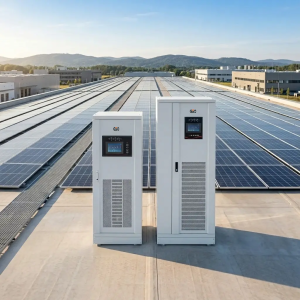

An on grid hybrid solar inverter links rooftop PV, a battery, household circuits, and the utility in one managed system. It uses solar immediately, saves surplus for later, and draws from the grid when needed. Reliable results depend on careful installation, regular checks, and settings that match the home’s tariff and routine.
What happens in an on grid installation
During daylight, solar modules deliver DC power to the inverter’s MPPT input, which converts it to AC for household loads. Surplus generation can charge the battery or be exported according to the configured priority and utility rules. After sunset, stored energy can serve the home before grid power is imported.
A solar hybrid inverter remains connected to the utility during normal operation. If the grid fails, approved backup circuits must be isolated before it creates a local supply. This prevents unsafe backfeed and defines which appliances continue running. Panels and a battery alone do not provide compliant outage operation.
Installation planning before equipment arrives
Begin with the electrical service. Confirm phase type, service voltage, main breaker rating, and utility requirements. Map PV strings, cable routes, battery location, and backup circuits. Check roof orientation, shading, and future EV or heat-pump loads.
The load survey should include running power and motor surges. Refrigerators, pumps, compressors, and air conditioners may briefly draw more current than their labels suggest. Decide whether high-demand appliances receive backup, load control, or grid-only service. This choice affects inverter size, battery capacity, and protection.
Mounting and electrical connections
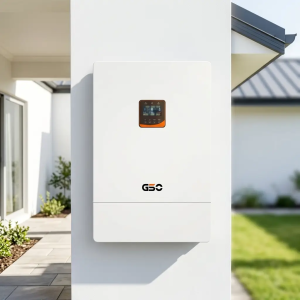
Choose a dry, accessible location with service clearance and airflow. The GST units carry IP20 classification and forced-air cooling, so they need an indoor area protected from moisture and dust. Keep water and combustible materials away, and follow clearance and temperature guidance.
Install DC isolators and overcurrent protection between the PV array and inverter. Verify polarity, open-circuit voltage, short-circuit current, and conductor sizing. Connect grid, backup loads, and grounding through specified breakers and transfer equipment under local electrical rules.
Battery and communication setup
The battery must match voltage range, chemistry settings, current limits, and communication protocol. Voltage alone does not guarantee compatibility. Connect CAN or RS485 as specified, set the battery type, and confirm state-of-charge and alarm data.
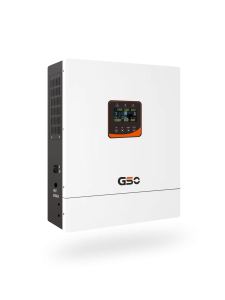
Within our range, GSOpower’s GST Series US Standard Split-phase Hybrid Inverter offers 6.6kW, 8.5kW, 10.5kW, and 12.5kW classes for suitable residential and small commercial projects. It uses a 48V battery platform and pure sine wave output for 120V or 120/240V applications. Up to nine units can operate in parallel.
Its four charging choices are Solar Only, Solar Priority, Grid Priority, and Hybrid. DSP control tracks PV input at a listed 99.9% MPPT efficiency. The solar hybrid inverter can start from PV without a connected battery, while optional WiFi or 4G modules enable remote monitoring.
Commissioning an on grid hybrid solar inverter
Commissioning should follow a controlled sequence. Inspect terminations, isolation devices, and grounding. Power the inverter according to the manual, set the grid standard, select the battery profile, and enter charging priorities. Test PV production, battery charging, grid import, export limits, and backup output.
Record voltage, frequency, battery limits, firmware, and communication settings. Simulate a grid interruption only after transfer equipment and emergency procedures are checked. GST switching is listed at 10ms typical, while actual appliance behavior depends on wiring, surge, and the complete design.
Maintenance that prevents avoidable faults
Inspect the inverter and battery area on a regular schedule. Look for dust buildup, blocked ventilation, loose terminals, corrosion, unusual odors, or signs of moisture. Review app data for rising temperatures, repeated alarms, unexpected grid imports, or a battery that reaches its reserve earlier than expected.
Keep firmware and monitoring credentials under controlled access. Test backup circuits periodically without unnecessary deep cycling. Review settings after adding panels, changing tariffs, purchasing an EV, or replacing a battery. A maintenance log reveals gradual changes.
Common questions from homeowners
Can the system work without a battery
Yes, the GST series supports PV-only startup when sunlight is available. Without storage, however, evening energy must come from the grid and outage endurance is limited. Adding a battery lets the system shift solar energy into later hours and support selected circuits when the utility is unavailable.
Does an on grid hybrid solar inverter eliminate grid electricity
Not automatically. Solar production changes with weather and season, and household demand rarely follows the same curve. The solar hybrid inverter can reduce imports through self-consumption and scheduled battery operation, but the grid may still supply energy during low-sun periods or heavy loads.
Can I connect any battery to the inverter
No. Confirm voltage, charge and discharge current, battery management communication, and approved protection settings. Using an incompatible battery can cause alarms, limited output, or unsafe operation.
How many appliances can run during an outage
The answer depends on continuous output, peak surge, battery state of charge, and the circuits selected for backup. Count simultaneous loads and account for motor starts. A higher-capacity inverter or managed load panel may be needed for central air conditioning, large pumps, or EV charging.
What does remote monitoring show
Supported monitoring can display PV generation, load demand, battery state of charge, grid status, and fault information. Confirm which parameters may be changed remotely and which service tasks require a qualified technician.
Conclusion
An on grid hybrid solar inverter earns its place by coordinating solar production, storage, grid interaction, and outage protection through one installation. Proper wiring and commissioning establish a safe foundation; inspections and meaningful operating data preserve performance over time. For a system plan tailored to local loads and battery requirements, consult GSOpower before selecting the final inverter configuration.